

Harvesting Light
“Jacob loved Joseph more than all his children.” — Genesis

Editor’s Note: An excerpt from Harvesting Light, Shira Atik’s novel-in-progress about family secrets, intergenerational pain, and the courage to choose hope over despair. —David Michael Slater
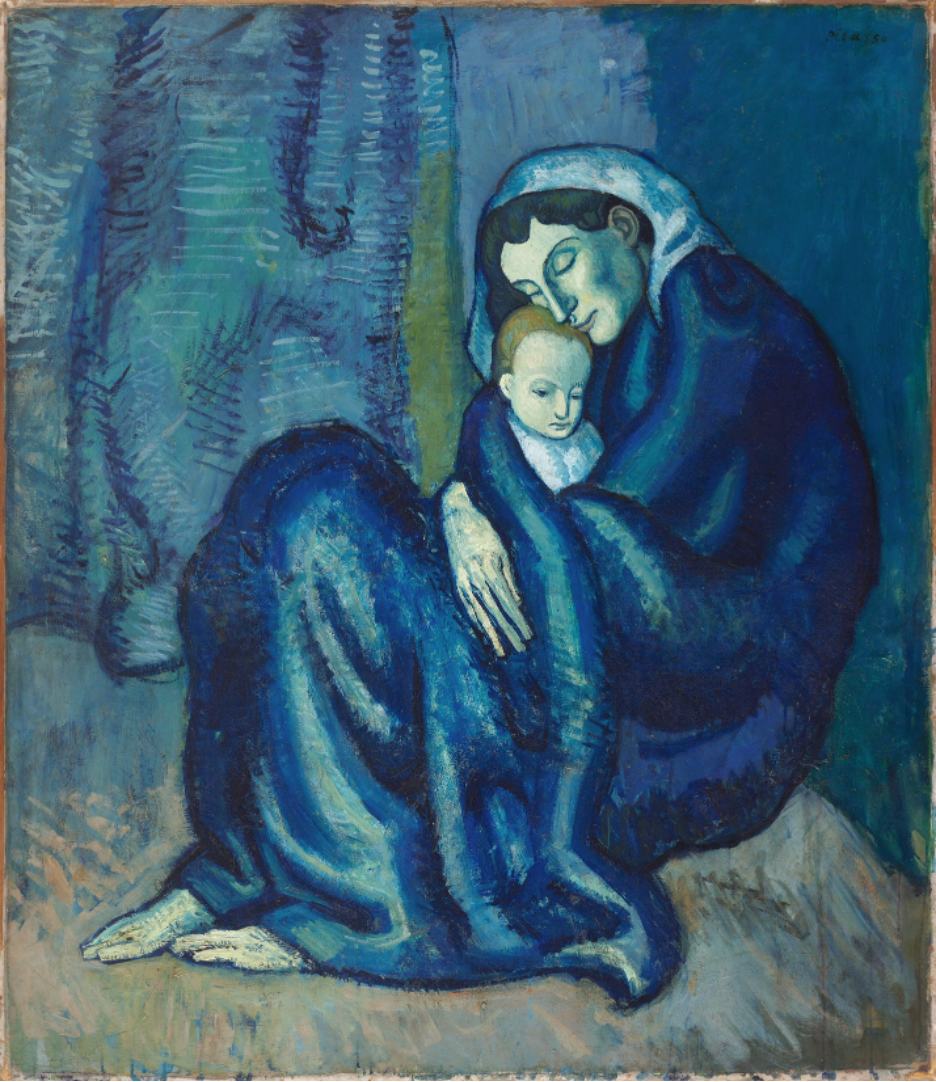
Credit: Harvard Art Museums
Like all stories of a life, mine begins years before I was born.
On August 24, 1937, my mother, Chaya Mintzer, gave birth to a son. The windows were open, and anyone walking through the Beis Yisroel section of Jerusalem could hear her shrieking like a dybbuk. My father, Berel, was mortified: a pious woman was supposed to make herself invisible to every man but her husband. Like all the other women in the neighborhood, Mamme covered not only her head but her arms and legs as well and didn’t sing in mixed company lest she lure a well-intentioned man into thinking impure thoughts—but here she was, sharing her private pains with the neighbors. Tatte was sure all the men on his street were picturing his wife half-naked, legs splayed, lying in a pool of bodily fluid. How was he going to look them in the eye when he saw them at mincha?
He begged Mamme’s sister, Esther, to close the window, but she refused. “When a woman gives birth,” she said, “evil spirits hover around her, waiting for a chance to touch the baby and mark it. Don’t you feel how close they are? If I don’t shoo the spirits out the window, your child could be born with a clubfoot or an extra finger—or worse.” What could Tatte say to that? He skulked off to the blacksmith’s house on the corner, where he sat on the stoop drinking pomegranate juice and waiting.
Three hours later, he saw Esther approaching, her face glistening with sweat. “Go,” she said. “Go see your son, but wash your hands first. And don’t wake Chaya.” So Tatte went home. He looked in on Mamme, taking a moment to thank God for allowing her to survive this mysterious ordeal; then he looked at his son and thought, This is why.
The child—Yitzchak, they named him—was a beautiful baby, with a headful of black hair and skin as velvety as the tallis bag my father brought to shul every morning. The moment Tatte picked him up, he was overcome with an ecstasy so powerful, so unfamiliar, he had to sit down.
In the weeks and months that followed, Tatte’s love for his son flooded the Mintzer household. It left no room for any other love. When Yitzchak cried at night, Tatte would lift him out of the cradle and sing lullabies he didn’t even know he knew. When the baby was frustrated or grumpy, Tatte would give him a spoonful of honey. When Yitzchak turned three, Tatte started taking him to cheder every morning and learning Torah with him every evening after dinner. Mamme would later say that when Yitzchak was home, her husband felt hopeful and forgiving, but when Yitzchak was out of the house, he paced back and forth, snapping at his wife until he returned.
Now listen: Mamme didn’t love Yitzchak any less than Tatte did. But her eyes were clearer, and her field of vision wider. She saw how her husband’s indulgence was turning their son into a selfish, spoiled child. When Mamme asked him to pick up his toys, he refused, and when she finally lost her patience and gave him a potch, he only laughed. At the market, when the baker offered him a jam cookie, Yitzchak would jab a stubby finger into a fancier confection. Mamme saw how he behaved with other children, how the other mothers kept their children away from him, afraid his bad character would rub off on them like a smudge of dirt. She urged Tatte to be stricter, less forgiving, but he wouldn’t—or couldn’t—change. “He’s a special boy,” he insisted. “He needs special treatment.”
What Yitzchak really needed, Mamme knew, was a younger brother or sister. He had to give up his place of honor, however painful that might be, and share the spotlight with someone else. But to her surprise and shame, Mamme could not conceive a second time. Month after month, her period arrived, as regular and unwelcome as the landlord. She confided in Esther, who had produced eight children in eleven years. Esther told her to be patient, but when Mamme looked into her sister’s eyes, she saw confusion and a flash of disdain.
After a few years, Mamme stopped praying for a child and started praying for peace of mind. She tried to be firm with her son, to teach him respect and humility, but she had a gentle nature, and she was inclined to forgive him. And if he were to be her only child, she would have to lavish all her love on him. It was an impossible situation, and it brought her to the edge of despair.
Then, when Yitzchak was four, Mamme’s breasts were suddenly tender, and her period was late. Oh, was she happy! So happy that she swept Yitzchak into her arms and danced him around the room. Tatte tried to rejoice too, both for Mamme and for the opportunity to fulfill God’s commandment, but it pained him to think that he would have to split his attention between two children. And since another child meant another mouth to feed, Yitzchak would sometimes have to do without.
My birth was not so different from Yitzchak’s: same withering heat, same shrieks, same open window. They named me Nechama—comfort; I was Mamme’s consolation for her years of barrenness, and for her intractable son. For Tatte, though, I was a source of distress. When Yitzchak was born, joy had spiraled through him like a funnel cloud, but when he looked at me, the air stayed still. He loved me, but I didn’t throw him off balance. When I cried, he would rock me in his arms, but his eyes were vacant, as though he were holding a doll.
The doctor told Mamme it was unlikely she would have any more children, but five years after my birth, she was shocked to find herself pregnant again. By then, she and Tatte had drifted apart, though they hid their rupture from the outside world. Tatte was ashamed of his inability to love his children equally, and Mamme was exhausted from working so hard to make up for her husband’s favoritism. Moshe was born with little fanfare in 1946. It was an easy, quick birth, and when people passed by the house, they had no idea a new child had come into the world.
***
Although I was expected to look after Moshe, to play with him and change his diaper when Mamme was busy, it was Yitzchak I followed around like a foot soldier. I studied him, mimicking his behavior in the hope that Tatte would look at me the way he looked at him. I would sit at the table with the Talmud open to a random page and trace the Aramaic words with my finger. When Yitzchak finished his morning prayers, I would take his siddur and stand by the wall, shuckling and mumbling gibberish. At first, Tatte reprimanded me—it was unseemly for a girl to behave like a boy—but he knew my actions were caused by his shortcomings, so he learned to look the other way.
As for little Moshe, neither Yitzchak nor I paid him much attention. He was an easy baby: he ate whatever was proffered to him on his rubber-tipped spoon, and by the time he was nine months old, he was sleeping through the night. He learned to read early and was the star pupil in his cheder. When Moshe was ten, the rabbi took Tatte aside. Moshe, the rabbi told him, was an ilui—a genius. He was the most gifted student the rabbi had ever taught and needed more than the rabbi could provide. He urged Tatte to send him to the yeshiva in Bnei Brak, where he could study with the wisest scholars.
When the rabbi was finished speaking, he waited for Tatte to celebrate. He was the father of an ilui! But Tatte only thanked him quietly and went home. He knew he should be nothing but proud, but all he could think of was what this would do to Yitzchak. He imagined his oldest son’s reaction to the news: Yitzchak’s face turning crimson while he pounded the table. Tatte’s heart ached for his favored, unremarkable son, but what choice did he have? Even if he kept the rabbi’s news to himself, word would quickly spread. No, he had to tell Yitzchak himself. He wouldn’t use the word ilui. He would send Moshe to Bnei Brak as quickly as possible, and soon Yitzchak’s humiliation and envy would fade.
Mamme cried when she heard the news, out of pride but mostly out of sadness. She didn’t want to send her youngest child so far away. She sensed he didn’t want to go, and she was right. When Tatte told us the news, Moshe threw the first tantrum of his life. He ran to Mamme, gripped her arm, and stomped his feet. Meanwhile, Yitzchak had thrown his glass to the floor and was running out of the house. Tatte followed him while Mamme cried into Moshe’s hair. Only I remained calm, watching and listening.
When the day came, Mamme and Tatte accompanied Moshe to the bus station. Tatte heaved his son’s cracked leather suitcase onto the bus, then gently pried Moshe away from Mamme, hugged him awkwardly, and backed away, pulling Mamme with him. That night, Mamme came down with the flu, and she didn’t leave her room for two weeks.

Credit: Ellie Berlin
Shira Atik is a writer and Hebrew-English translator. Her poems have been featured in numerous literary journals, including Midwest Quarterly, Poetica Magazine, and the Jewish Literary Journal, and her translations have been published by the Jewish Publication Society, the Institute for the Translation of Hebrew Literature, PJ Library, Jewishfiction.net, and individual authors. She has an MA in Hebrew Literature from New York University and an MFA in creative writing from Lesley University, and is currently working on a novel.
Things That Bring Me Joy
Discovering a new café
Kayaking at sunset
Raspberry-chocolate-chunk ice cream with hot fudge
Rereading Laurie Colwin
A phone call from an old friend
Jewish Things That Bring Me Joy
Singing Zemirot with my family
Dr. Brown’s Black Cherry Soda on Pesach
My weekly Hebrew literature class
Hanging gourds in our Sukkah
Celebrating Yom Ha’Atzma’ut in Israel
This is such an intriguing story, and the pathology of the father - who goes from favoring a child to tiptoeing around it - is really nicely handled. Love the stoic, observant middle child. Very nice.