

Lone Ambassador
“It is not upon you to complete the work, but neither are you free to desist from it.” — Pirkei Avot

Editor’s Note: A short story by Susan Shwartz, which she calls “The ultimate Nice Jewish Girl fantasy: Barbie, turned human, and working a real job in Israel. —David Michael Slater
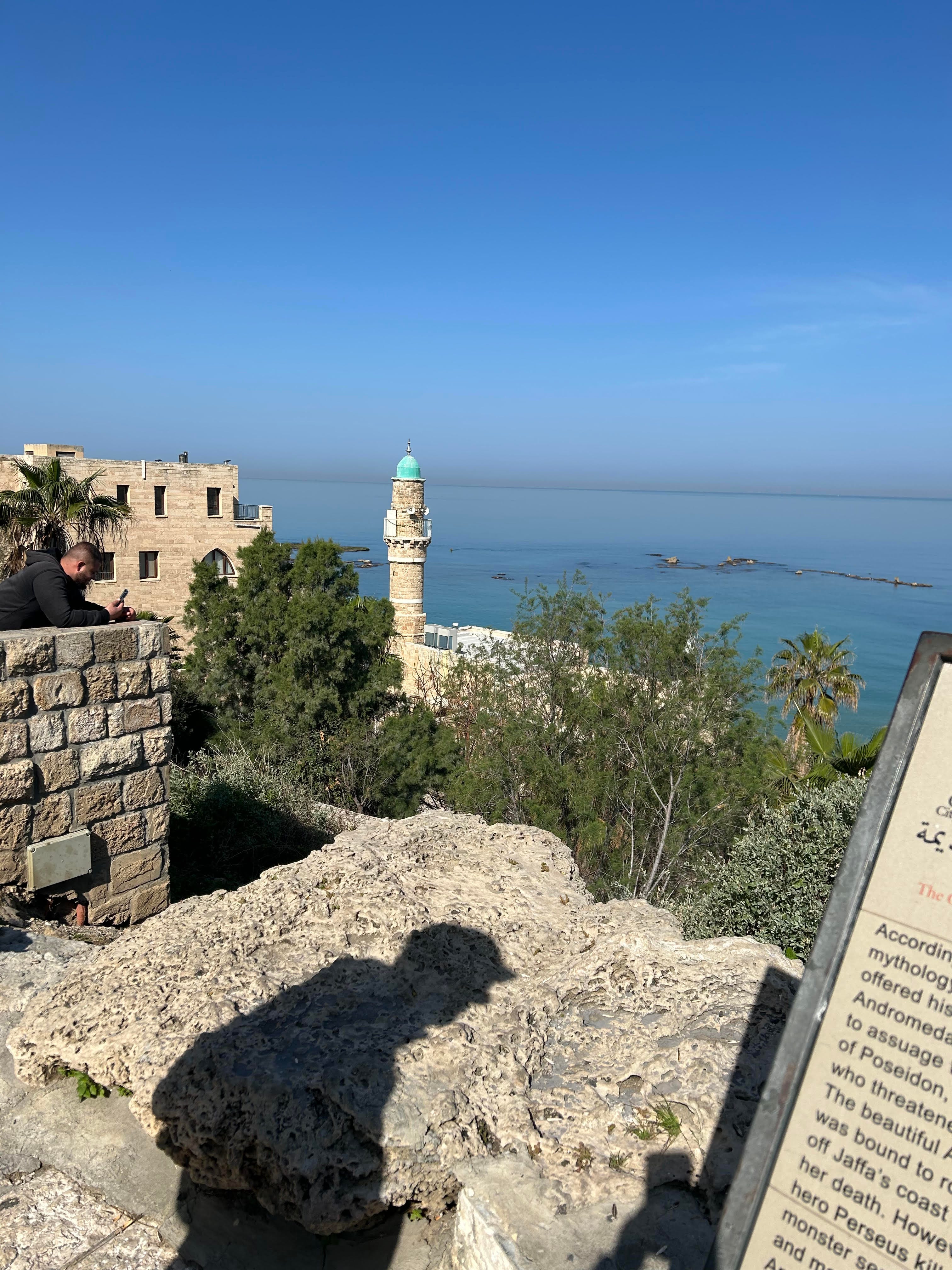
Photo credit: Susan Shwartz
Jerusalem’s golden stone glowed as the American corporate ambassador’s high heels clicked through the Pat neighborhood onto Eli’ezer Hagadol Street. No rain had fallen that night, but the streets looked as freshly washed as the windowless walls of Number 3, the Hand-in-Hand Max Rayne Bilingual School.
“Why would a school take this kind of trouble for our visit?” Ambassador Barbara Mosko asked her security. The man and woman who accompanied her, their eyes flicking from point to point, were so close in height and build that they could have been a matched set. The only way anyone could distinguish security from the ambassador was by the letters “MEM” on their blazers. Security meant veterans. The man was a former Lone Soldier who had joined the IDF from the US and stayed to make Aliyah. He wore no tie, of course. The woman was native-born and carried herself like a lioness. She had pulled back her streaked mane of hair into a no-nonsense ponytail. By contrast, the ambassador’s hair fell in waves. She too wore a suit, but with highlights of pink in the scarf and shirt. Like her male security guard, she too was alone. A lone ambassador.
At a buzz from comm, her Security came to red alert. They communed with their phones, muttering agreement. With a deliberate pad-pad-pad of sturdy shoes, the man moved behind the other two. He swore in English and Hebrew as he ground a crumpled, water-stained piece of paper underfoot. It was smeared with red ink letters in Hebrew, Arabic, and English above images of dragons, pale horses, and red-crossed knights.
“The End is Coming,” he read. “Our latest plague: the End of the Worlders. They had a rally at Har Magiddo last night. Reserves were called out.”
“Damn Doomers,” said his female counterpart. Her fine lips curled in disdain. “They keep hoping we’ll all assemble in Israel, the red goat will appear, sacrifices will be performed at the Kotel, and the Last Things will eliminate the rest of us.”
“Oy,” her partner agreed.
The Ambassador’s slender hand, with its pink manicure, closed on the handle of her briefcase. Unlike the others, she was unarmed. Still, she thought the briefcase could pack a wallop if she swung it just right. In her long and varied career, there had been times when she carried weapons. Just not this time.
“We’ve got this,” her almost-twin guard reassured her. Ayelet was not going to serve as her body double; Barbara instantly made up her mind.
“Tal Debani didn’t say a word about end-of-the-world cults when Marketing briefed me at our Hulda Branch office,” Barbara remarked. CEO Kreiz had been so proud to send her overseas to the country of his birth. She’d hate to disappoint him.
“Don’t be...”
“Scared?” asked the ambassador. “I’ve worked with doctors, astronauts, explorers, even veterinarians. And veterans. Been there, done that, got the outfits in walk-in closets. Religious nuts won’t scare me.”
“Not all religious nuts are just crazy,” said Ayelet. “Remember October 7.”
“I’ve called ahead,” Avi, the male security guard, reported. “Your packages arrived from the home office. They’ve been scanned. We can go in.”
“I thought I was running this show,” the ambassador complained.
All three smiled, showing perfect teeth, and in complete understanding.
“We run security,” said the man. “You smile and act diplomatic. Show time!” he barked into the comm attached to the metal MEM on his lapel.
“Haul ass, Your Excellency,” said Ayelet. She put a hand on the ambassador’s impeccably pressed arm and gave her a polite shove.
Ambassador Barbara had worked hard to gain agency, not to mention dignity. Her most dignified choice was to haul ass, so she hauled toward the door. Her briefings had covered anti-Arab, anti-Christian, and anti-Jewish riots thoroughly. She’d read on her own about apocalyptic cults that had sprung out from under the rock of American nationalism, and she didn’t like what she’d read.
Her high heels sped up their click-click-click. The spikes might be incongruous on the ancient stone, but these shoes were made for walking, and her arched feet were machined to fit them.
The heavy school doors slammed behind them, and her hosts greeted her. Once again, the world smiled on Barbara just as it had before thoughts of death had propelled her into the quest that changed her world.
Music and voices rang out in the cool halls. The teachers and administrators were men and women of various ages. Some wore kippot or hijab, while others went bareheaded. Some of the men wore beards, while others were balding. Just like the men, the women ranged from too thin to dumpy. All had the faintly disheveled look of professional educators in comfortable clothes designed for people who did a lot of floor-sitting. Children, tweens, and teens peered out of the classrooms, then vanished within when their teachers scolded them.
Principal Efrat Meyer evaluated the ambassador’s trim outfit, estimating the possible cost of the suit, pink shell, briefcase, and ridiculous shoes. Smiles beamed all around, hands clasped, cordial voices in a symphony of accents welcomed the corporate Ambassador from America—come right in, sit down, have coffee or maybe a glass of tea, some watermelon, or they could send out for falafel if she liked that better.
“I had breakfast in Hulda,” the ambassador replied. She allowed herself to be seated in the teachers’ lounge with its happy clutter of pictures, books, and computer parts. She accepted coffee, tiny cups taken from a swinging tray. Once she saw that her security had coffee too, she placed her lips to her own tiny cup. The coffee was thick, almost syrupy with sugar.
“I am so happy to be here,” she sing-songed, setting it down. She smiled broadly as she saw people respond to the warm melody of her voice. “I am Barbara Mosko. Barbara bat Ruth.”
They nodded at the matronymic, then raised eyebrows. “Is Barbara a Jewish name?”
“Originally Greek, I believe,” she said. “Like Barbra Streisand?”
How much more Jewish than Streisand could anyone get? Her mother had idolized the woman.
“I wouldn’t think you’d be old enough to remember Streisand,” said one of the male teachers.
“I’m older than I look,” Barbara said.
“How about Mosko?”
She understood now. The Jewish administrators were looking for landsmen from their own Old Countries, even individual shtetls. “My mother’s people were Polish,” she said. “My grandparents got out, well before...” She let her voice trail off tactfully. Her hosts hmmmmed in understanding. “We got American names.”
There was a murmur of faint regret. Americans. Always assimilating. Unless they became olim and made Aliyah or became baal Teshuvah, or orthodox. Not that the ambassador could be mistaken for either. Her sleek blonde waves were uncovered. Her perfect outfit was the height of California style. Unlike the other women, who wore braids or buns or covered their hair, she had graceful golden streaks in her curly mop.
Barbara bat Ruth coughed discreetly. “I bring greetings from our CEO, Ynon Kreiz. He is very proud to welcome Hand in Hand to our company’s programs on children’s entertainment, education, technical training, and music.”
“Just remember,” Principal Meyer cautioned, “this is not your Monster High.”
Barbara actually liked that company program. “What’s wrong with its slogan?” she laughed. Be yourself! Be unique! Be a monster! We think it’s important to help students find their passions. I hope you can find time for me to talk with them. I gather the company’s packages have arrived?”
Ambassador Barbara was fairly certain they’d have an assembly. They always had assemblies.
“Are you staying at Hulda Kibbutz?” asked Efrat Meyer. “That’s more than half an hour from here, even without checkpoints. They should have put you in Jerusalem.”
Barbara shook her head. “I’m staying in the City. I came in early to tour around. It’s just amazing!”
She glowed at her audience’s reaction. Her job was to reach out, to engage, to teach, to entertain as she guided children, especially girls, on their path to adulthood. “Our CEO, Mr. Kreiz,” she added, “insisted that I stay at the King David. He said that’s an important part of my education.”
“You must have some expense account,” one of the younger men marveled. A woman elbowed him in the ribs.
Barbara knew Israelis sometimes lacked a filter. She shrugged, a gesture she had copied from local shopkeepers. “Marketing insisted. Good brand image, they said.”
“Your CEO is right. The King David is very historical. Depending on who’s talking, it was the site of the most important terrorist raid in the twentieth century, or any other. Your CEO, he’s Israeli?”
“Dual citizenship. He lives in LA now.”
An eruption of flamboyant arpeggios interrupted their conversation. Barbara raised an appreciative eyebrow. “That’s Yael. She’s in her last year here. She’s preparing for an audition as a piano soloist at the Polyphony Conservatory. Do you know about it? It succeeded the orchestra that Daniel Barenboim and Edward Said started. When he wasn’t throwing rocks, he was a notable pianist.”
Did I know that? Barbara wondered. The people were insistent, challenging, determined—and they had a right to be. Her mother had taught her never to give up. The weight of all that Barbara did not know about the world weighed on her slender (but toned) shoulders. She could study her whole life and never know it all. Just like anyone else, thought.
“She can really play,” Barbara remarked, arching a perfect eyebrow. In her own role as a musician, she’d worn a black dress that left her arms bare. She remembered sitting, be-gowned and nervous, in a hall before a great piano. Her arched feet barely touched the pedals. Despite the applause, that gig had been nerve-racking, but she’d kept the dress.
“We know you must be busy,” said the principal. “What would you like to see first?” Behind her, the ambassador heard people unpacking the boxes that had been sent along. They held marketing materials called “schwag” in Anglo-Yiddish: water mugs, T-shirts, and stress balls for the kids, and late-model, linked iPads for the classrooms.
“I’d just love to see the whole school, if there’s time,” Barbara said. Meet-and-greets required enthusiastic interest, but she was genuinely eager to see the gyms, the books, books, books, all over the place, and the equipment. Not shiny new, well-worn, but the best possible value for the dollars or shekels. Her company’s grants would help with that.
As they scrambled to their feet, one woman reached for Barbara’s cup to carry it over to the nearby sink, but she took it there herself. “But you’re our guest!” they protested.
“We’re all mishpocheh,” she assured them, then smiled at their reaction to her using the word.
“We hope you’ll be willing to answer questions from our students,” the Principal said.
“Of course,” she said, thinking that if the students here were anything like their teachers, she’d be answering questions until lunch.
They led her past computers, whiteboards covered with Hebrew and Arabic script, as well as English. The walls bore large pictures, almost murals, covering the windowless corridors. Classrooms opened off the corridors, heavy doors propped open. Each small room was presided over by two teachers: one Hebrew and one Arab.
In a primary classroom, Barbara saw two little girls playing with a doll dressed in an incongruous combination of hijab and the traditional black and white swimsuit. One of them, still too young to cover her hair, tinkered with the doll’s headcloth. The other, in the longish skirt and long-sleeved top of an observant Jewish child, shook her head. “Not tznius,” she disapproved. “She’s got no clothes on.”
“She means ‘modest,’” whispered one of Barbara’s guides. “Now watch.”
The child reached for a gown that covered a toy and wrapped it about the doll. “Isn’t that better?”
The doll’s arched feet were still bare. The two children each took a tiny shoe and slipped it onto an arched foot. Now, the doll was properly modest. Halal and tznius both.
A set of paired doors led onto what she had been told was the school’s community garden. “It grew the vegetables the students ate. Leftovers went to charity.
They moved on, past all 26 classrooms, each named after a Swiss Canton. Past the library that served as the dynamic resource center of the school. Past the library to the designated art, science, computer, music, and movement rooms. From outside came the thwock-thwock of balls being thrown, the jeers when balls were missed, and triumphant yells.
“The kindergarten has its own building,” the principal told her. It stood among shade trees in a landscaped garden misted with water.
They led her into the auditorium. It wasn’t large because the school was not large—no more than 2,000 students in the entire program across Israel, but it was well-equipped. Broadcasting and recording equipment were already set up. Security walked over to check them, then the teachers led her to the stage past a display of blue and white Israeli flags and, in honor of her visit, the Stars and Stripes. They even put up a pink flag with the company logo. The ambassador shivered a little. She had gone from living life in a dream house with no stairs to representing a global company. Her company. It hardly seemed possible for someone who had started life clipped to a box with a cellophane top.
Principal Meyer walked forward and tapped the microphone as the students crowded in, eager not to miss a thing.
“This is Barbara. Barbara bat Ruth Mosko. She has come to us from one of the leading U.S. manufacturers to learn about the work we do. Her company has agreed to support us.”
The children of all three faiths broke out in applause.
“Now, this may be a little hard for some of you in elementary English, but think of it as a challenge.”
Joyous hoots from the audience when assistants passed out T-shirts. Pink, of course, even for the boys. Even the most modest children could wear them over a long-sleeved jumper.
“For all of you, this is a great chance to hear English from a native speaker. Write the words you don’t recognize down on your phones and, later today, we can look them up.”
The phones were a treat, too. The students were carefully disciplined. Games and texts on their phones were distractions. But the teachers had found a way to make phone use educational.
Barbara pulled out her own phone in its pink rhinestone case. The girls murmured admiration.
“Ladies and gentlemen,” she began. “Chaverim.”
More applause.
Barbara clicked her phone on, sent the PDF, and saw the tech nod. Received and uploaded.
Show time-show time-show time.
“I am delighted to be here today,” she declared. Breathe from the diaphragm, she had been taught. She breathed from her diaphragm.
“First, congratulations on being named 2023’s school that has done the most to succeed despite adversity. Mazel Tov!”
Students and faculty applauded.
“Ynon Kreuz, our CEO, asked me to tell you he’s delighted to work with you. He asked me to say a few words. They aren’t really my words, but those of my mother, who founded the company.
“Your school operates in accordance with the principles she embedded in our corporate DNA.” She paused. “If you do not know what DNA is yet, your teachers will help you look it up. You embody another important principle as well: diversity. We believe it thrives through innovation. That’s where we come in to provide you with equipment to help you innovate. I heard it being set up when I came in. But the most important equipment is what you carry around: your brains and your hearts.”
She drew a deep breath. “You, and people like you, are our future. As my mother always said, the key to success in our personal, professional, and political lives lies in harnessing our unique skills and passions to use them to bring about positive change.”
She glanced down at the intent small faces at the front of the auditorium. The two little girls clutching their doll swaddled in its robe and hijab were watching her. The older students, seated at the back, eyed her more skeptically.
“I know,” Barbara went on, “that you and everyone in this school possess talents and interests that can change lives. But let’s drop the fancy words. Let me tell you my own experience. If you had told me that I would be a product ambassador for a Fortune 500 company, speaking all over the world, I would not have believed it. But I was told that I could do anything, and I found that was true! So, here I am to pass those words on to you.”
She flung out her arms, basking in the applause as if she stood on the Beach back home with its brilliant light. “When we combine our abilities, we can improve society. And it needs improvement, no matter how much we do.”
Barbara, unused to weeping, felt tears well up. “My mother, Ruth,” she said, choking up, “always said that dedication and commitment can help us create a better world and leave a legacy that touches lives and inspires the ones who come after us. The ones after you.” Then, loudly and proudly, she sang out, “As a result of my mother’s legacy, I am proud to say that your school will now partner with our Children’s Foundation.”
A slide glowed on the big screen.
“Our foundation emphasizes four principles. First: Creating Access to Play. Today, I saw two students making certain that their chosen toy conforms to cultural values important to both of them.”
Squeals from the little girls in the front row, who clutched both their dolls and each other’s hands.
“In doing so, they join play with ethics. I think this is in the highest tradition of both our organizations. This is true not just for school kids, but for people who are ill, recovering from natural disasters or wars, or otherwise disadvantaged. We hope that as part of our partnership, you will help us provide creative play in kibbutzes, camps, and children’s hospitals. Can I get a show of hands on how many of you would be willing to volunteer?”
Hands flew up in the air like so many doves. “We create play kits and donate them. I’m leaving a model with Principal Meyer so you can see what you will be sharing with other children. We’ll be sending volunteers to help you learn and maintain power wheels and teach people who find it hard to move about on their own.”
“Second point,” she said, “we value volunteering. Our fundraisers, toy donations, beautification processes, and other activities are global. For example, if there is an earthquake, we’re usually behind the first responders in helping restore community life.
“My own life tells me how all of us can be more than we are. Our educational programs emphasize what we call STEAM”—the slide erupted in a cloud of rainbow colored clouds—“Science, technology, engineering, art, and math. Our program, which started in 2013, is free to all schools.”
Don’t talk on forever, she thought, a lesson from Madame President. She flipped through the slides until she reached the end. “Finally,” she concluded, “our goal is to prepare the next generation of girls. We give them the resources they need to do anything.”
More applause.
“Let me leave you with a last message from my mother.” Barbara’s eyes filled a little with the memory of the much older, tiny woman who cracked jokes about her taxes and her double mastectomy and always had a cup of tea for a woman in need. “I believe that creativity is the missing ingredient in making whatever we do worthwhile. If you create an idea, and the idea is something you believe has potential, that’s where your passion lies. And that’s what motivates you. So, do your homework, do your research, and make sure that you understand the market, the potential, and the demand for your idea. Seize every opportunity to grow and free yourself, reach out, and empower yourself as well as other people. You and your teachers and this school are all living proof…”
Pop-Pop-Pop!
It came from several directions.
Oh, my God.
Barbara knew that sound from dating an army man. Sniper fire. And it was close.
The pop-pop-popping grew louder.
This could be an assault.
Children ducked and covered their heads. Their teachers, along with the eldest students, the ones about to begin their IDF service, sprang into action, guiding them in groups to safe rooms.
Barbara’s security tackled her. Hard. Students cried out in alarm, not at the shooting (they were, sadly, used to such things), but at the sight of her lying prone on the stage. “I’m not hurt!” she assured them. Startled, yes. Frightened, too.
“Come on!” Suddenly, the two little girls with the doll grabbed and pulled at her hands. “We have to take shelter. You can join us!”
Security would not allow it. They had their weapons out.
“I can use a gun,” Barbra told them when she’d gotten properly to her feet, “if you’ve got a spare.” Khaki had not been her favorite color, but it was better and cooler than the spacesuit she’d worn in her time as an astronaut. NASA had reclaimed that costume.
“We’re getting you under cover.” The guards were still composed, but Barbara sensed their tension. Everyone in this school was too vulnerable—but they weren’t about to let anyone kill them or take hostages.
“You come with us, too,” they told the girls.
“Our class has a plan,” the girls protested. “You have to let us join them.”
Two of the older students, accompanied by a very determined teacher, were suddenly there. “You’re putting these children at risk,” one of them snapped. “How stupid do you think we are, not to have safety drills and shelters?”
Security stepped back, muttering apologies. The little girls followed their teachers out to safety.
“They know what they’re doing,” Barbara said. “You know, if you think you could be more help outside...”
“Don’t even think about it!” Ayelet ordered. She was suddenly there, too.
Next question, then. “What do you know?” Barbara demanded with what she remembered as Command Voice. It hurt her throat.
“We got the word from Beit Safafa down the road,” Ayelet said. “It’s not Arabs. They got hit, too. It’s one of the damned Armageddon cultists. Doomers, hiding in the Christian sector. The locals are searching the area. They don’t want the Day of Judgment, either.”
Barbara looked toward the doorway of the now-empty room. The counselors would be with them, working their magic. The Christian children in the school would be the most upset to learn what was happening because Jews and Muslims have known about doom cults since the 1099 sack of Jerusalem during the First Crusade.
Are you just going to stand there waiting to be moved to the next scenario? The voice in Barbara’s head asked her. You’ve learned better! In other words, haul ass, Ambassador.
Avi formed a one-man wall between Barbara and the door. “A bunch of the Doomers have blocked the street,” he said. “Cops have to clear them to get in here.”
Barbara reached for her phone. Light glittered on the pink rhinestones.
“What are you doing?” Avi demanded.
“Calling for reinforcements.”
In the war on the Beach, the bros had weaponized slap fights, tennis racquets, boats, and even their cherished horses, until the women, restored to sanity, restored order. It had taught Barbara something: The women and the men she had cherished as tennis partners, swim buddies, and surf standouts were great at improvisation.
“Don’t be afraid to take risks,” her mother had often said. “Sometimes the biggest risks lead to the greatest rewards.”
But did she have any right to put her friends at risk? Already, they were mustering their formidable resources, seizing cars, bikes, ships, rockets, and rollerblades. They might even bring horses.
If they could weird out the Doomers, maybe no one would get shot.
Her phone buzzed.
“My friends are on their way,” she told Avi and allowed them to lead her off.
Actually, from the sound of approaching yells, cheers, and hoots of vuvuzuelas (where’d the bros get those?), the cavalry was already there. She was impressed with how quickly they could transition between worlds.
The doors of the school opened. Decked out in bright jumpsuits, shorts, and tees, tailored separates, a group of almost identical men stampeded in, accompanied by….
“Madame President!” said Barbara. She bowed to the Black woman, behind whom came the media: Greta and her camera crew.
“What do you need, Barbara?” the President asked.
“Shut this down. Don’t scare the cops. Or the IDF.”
“Right...” Madame President beckoned to her aide, a woman with straggly, slashed-off hair and strange rings. Her legs were still a little stiff.
“We got this,” the weird woman said. “Oh, boy, do we got this!”
She ran out on those strange legs, shouting as she went. Horses neighed and screamed. So did the Doomers. Pop-Pop-Pop! The real security flushed out the snipers, making Barbara flinch in her cover among the trees near the entrance to the kindergarten.
“Oh, my God,” Barbara cried, “they’re targeting the kids!”
Ayelet was on her phone. “Your people reached the kids,” she told Barbara. “They’re all right. The Doomers, though—they’re in the line of fire.”
Breaking free of Avi and Ayelet, Barbara dashed past her reinforcements and security, all of whom had their weapons trained on the intruders.
“Friends!” she cried, remembering her earlier roles. “Stand down!”
The man in charge wore a heavy white fur coat over bare skin—in this heat! That meant authority among the bros. He was the first to lower his weapon, a tennis racquet, its strings now stained red. Standing a little apart, as he always did, an auburn-haired, more practical man came up wielding a golf club.
“We’ve got them,” he said. “I’m going to liaise with the locals.”
Where had he gotten that word? Calling Israeli reserves and police locals? Barbara could just hear her mother Oy Veying. Still, it was better than snipers. Better than a body count.
I am one hell of an ambassador, Barbara thought. But she was anything but “lone.”
Finally, the chaos resolved itself. Groups were led off, forces marched away, trucks drove off, the bros stabled their horses (God only knew where), and agitated parents rushed past security to collect their kids. Finally, the teachers, the principal, some of the older students, Barbara’s own guards, and the leaders of her reinforcements had time to collapse in the garden. Her crew struggled with real tea in the cups but ultimately managed without spills.
The day was moving on toward twilight. It was very peaceful under the trees.
Just as Barbara thought she might catch a catnap, two young boys came up, accompanied by teachers. One was Jewish, the other Muslim.
“Miss...”
“Just Barbara,” she said.
“We have a question.”
She looked at them, smiling encouragingly. Resilient kids, with questions after an attack.
“What is that?”
“You talk about girls all the time. What about boys?” they asked.
“You see my friends,” she said, waving to her reinforcements. “Not all of them are girls. I heard talk of a trip to the Dead Sea. They like the beach. Do you?” Then, inspiration having struck, she asked, “Do you like horses?”
They nodded enthusiastically. “I’ve never ridden,” said one of the boys.
“They’ll help you learn. You’ll have a lot of fun.”
The boys ran to find bros to teach them how to ride horses, the terror they’d just survived already far from their minds—until the nightmares came, anyway.
Let this generation be the last to wake screaming, said the voice in Barbara’s head. OMG, she thought, I actually prayed! She had never done that before.
Not every night is Girls’ Night, she realized. Nor should it be. Life is too precious to leave anyone out.
One of these years, they would all be fine.
Susan Shwartz holds a Ph.D. in English from Harvard and a B.A. from Mount Holyoke. She is a five-time nominee for the Nebula, a two-time nominee for the Hugo, with nominations for the World Fantasy Award, the Philip K. Dick, and the Edgar. In 1993, the San Francisco Chronicle cited her work for Best Novelette, and, in 1996, best Novella with the late Mike Resnick for “Bibi,” a 1995 winner of the HOMer award. She has published nearly thirty books, including anthologies, science fiction, historical fantasy, and STAR TREK, as well as more than 100 short stories, novelettes, and novellas. Her nonfiction has appeared in THE NEW YORK TIMES, VOGUE, THE WASHINGTON POST, AMAZING, ASIMOV’S, and ANALOG. Stories are scheduled for release in the next year or so on subjects as diverse as the Soviet Space Program, Eleanor of Aquitaine, Himalayan-level climbing, and the Battle of the Bulge. Susan maintains a Substack column in which she writes about polemics, semantics, and pop psychology just because. Susan collects SF art and loves opera, theatre, and travel. With her partner, she speaks about financial management for creative professionals and how to begin an art collection at major conventions.
What tiny delights lift your spirits and make you happy?
New England leaf season
Spending a day keeping my feet warm under a quilt and reading
Being in a theatre when the lights dim and the music starts
The aroma of steak, grilling outside
Seeing a painting at an art show and bringing it home to join the collection that takes up far too much of our wall space
What tiny JEWISH delights lift your spirits and make you happy?
Any Jewish liturgical music, but especially Kol Nidre
Remembering my first visit to Israel and how I kissed the Wall
Setting a Shabbat table in our house, which had never had a Shabbat since its construction in 1974
Lighting my mother’s Menorah, a gift from her mother, made in pre-Mandate “Palestine”
Breaking the Yom Kippur fast