

Night Doesn't Fall, Day Does Not Break
Introducing The Poetry of Susan Aizenberg

EDITOR’S NOTE: In these luminous poems, Susan Aizenberg explores a vast range of themes, tragic and comic: a Jewish poet’s untimely death in the Shoah; a young Jewish sweatshop worker at the notorious Triangle Shirtwaist Factory, where so many exploited and vulnerable employees perished in a fire; the vividness and creativity of old Yiddish curses; our collective Jewish disposition to anticipate the worst; and the bravely aging Jewish crones of Florida, her mother’s cohort, meeting the indignities and infirmities and losses of their generation with resilience and moxie. In language lyrical and spare, Aizenberg renders these Jewish lives and sensibilities with poignancy, potency and abundant compassion, yielding an indelible and most affecting experience. — Elissa Wald
✡️
FORCED MARCH


—What would I have to be in order to speak about him…

                                   —Adam Zagajewski


1


I remembered it wrong, the scene in the film

within the film about Radnóti—there were no young

lovers coming upon the killing in the woods.

It was an older man and a woman who might have

been his daughter. And the soldiers hustling

Radnóti and the other Jewish prisoners too weak

to work, and not dying fast enough, to dig

their own mass grave, then coolly shooting them

one by one, might have been their beloved sons

and grandsons. And I may have dreamed those listing

skeletons marched through postcard towns,

sunshine on rags, the apple-sellers, a blonde child

rolling a wheel with a stick past the starving men.

The wide-angled views of lush and lovely country—

Hungary, Yugoslavia, Germany. Those tracking shots

of green swells of pasture and innocent cows

grazing, peasants carrying their ancestral hatreds

along with the sparse grain and potato crops

in mule-drawn carts. Those close-ups of adolescent

soldiers grateful someone else is led away.

A cart man feeding fresh hay to his horses.

The autumn woods suffused with morning light.


2


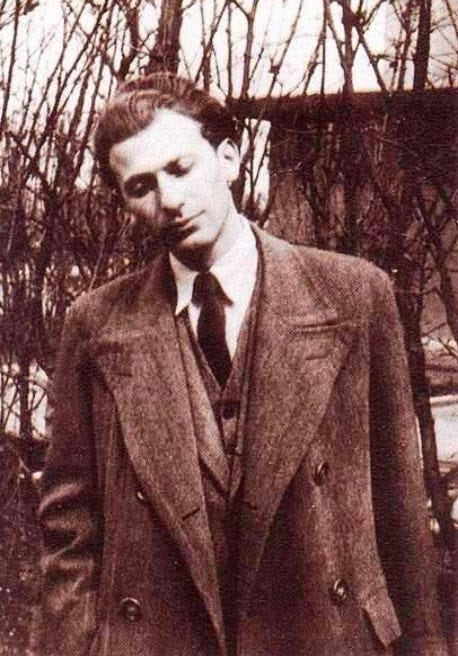
Everywhere in Hungary there are statues of him—

in front of libraries, town halls. In the cover photo

of my new translation he’s cast in bronze.

Slender and tall, he leans against a wooden rail

in a sunlit park, his handsome profile tilted down,

as if he’s staring at his shoes, lines forming, perhaps,

in his mind. His poems were prophetic, writes one scholar,

his gift arising, she thinks, from his Jewish predisposition

to anticipate the worst. In the camps, on the marches,

he wrote. In his filthy bunk, among the worms and lice.


             The poet writes, as dogs howl or cats mew.

             Or small fish coyly spawn. What else am I to do?


3


For the denouement, the director’s framed

the exhumation site: a row of pine coffins

lined up neatly as shipping crates,

on top of each a pile of rags, each man’s

things roughly displayed for whoever is left

to claim them. On Radnóti’s the famous raincoat,

hidden in the pockets, his photos and letters,

an exercise book of ten poems. Folded within

its pages, a flyer advertising cod liver oil,

Radnóti’s final lyric on the back. I can’t stop

thinking of how he’d written, five times,

in five languages— the French and English …

rather blurred and party illegible—

on the book’s first leaf, the same message—


            Please, forward this booklet which contains the poems

            of the Hungarian poet Miklós Radnóti …

                          Thank you in anticipation.
TRIANGLE SHIRTWAIST COMPANY


                  —Emma, aged 16


I do fine work, my stitches delicate

as an eyelash. This earns


me a spot by the window. Dirty

as it is, some light filters


through. Rosie’s clumsy, her fingers

thick and fit only for rough


cloth stitched by gas lamp.

We buy our own needles, pay


the electric for our machines.

We rent the backless stools


we sit on. The bosses lock us in

and we’re searched


when we leave. Some girls

do steal—buttons, ribbons,


even whole shirts. But not Rosie

and me. Now all I have left


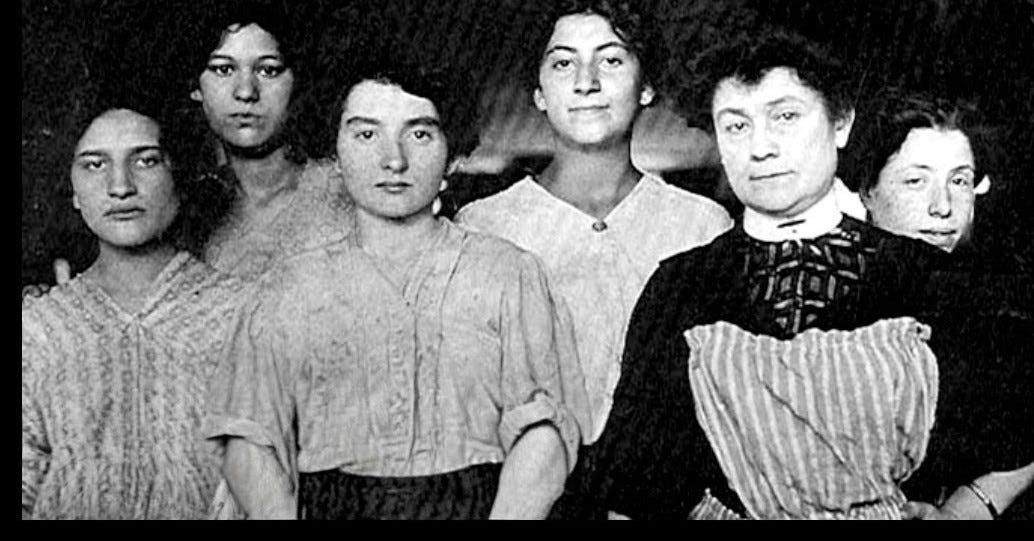
of her is the famous photo.

She stands unsmiling


beneath hand-lettered signs

tacked to the wall—


No back-talk, no stalling in the Ladies.

Don’t come late. Don’t leave early.


If you’re not here Sunday,

don’t come back on Monday—


beside her, and taller than she,

towering stacks of unfinished cloth,


her day’s quota, endless as the straw

the miller’s daughter had to spin.
AFTER READING THE NEWS THIS MORNING, I TURN TO THE CURSES OF MY ANCESTORS

                          —a found poem


May you live to a hundred and twenty,

without a head. May you grow

like an onion with your head in the ground.

May you crawl on your belly.

May you become swollen and veined

as a mountain, pepper in your nose

and salt in your eyes. May all your teeth

fall out, except one to give you a headache.

May you have a hundred houses,

in each house a hundred rooms, in each

room twenty beds, and may fevers

and chills toss you from bed to bed to bed.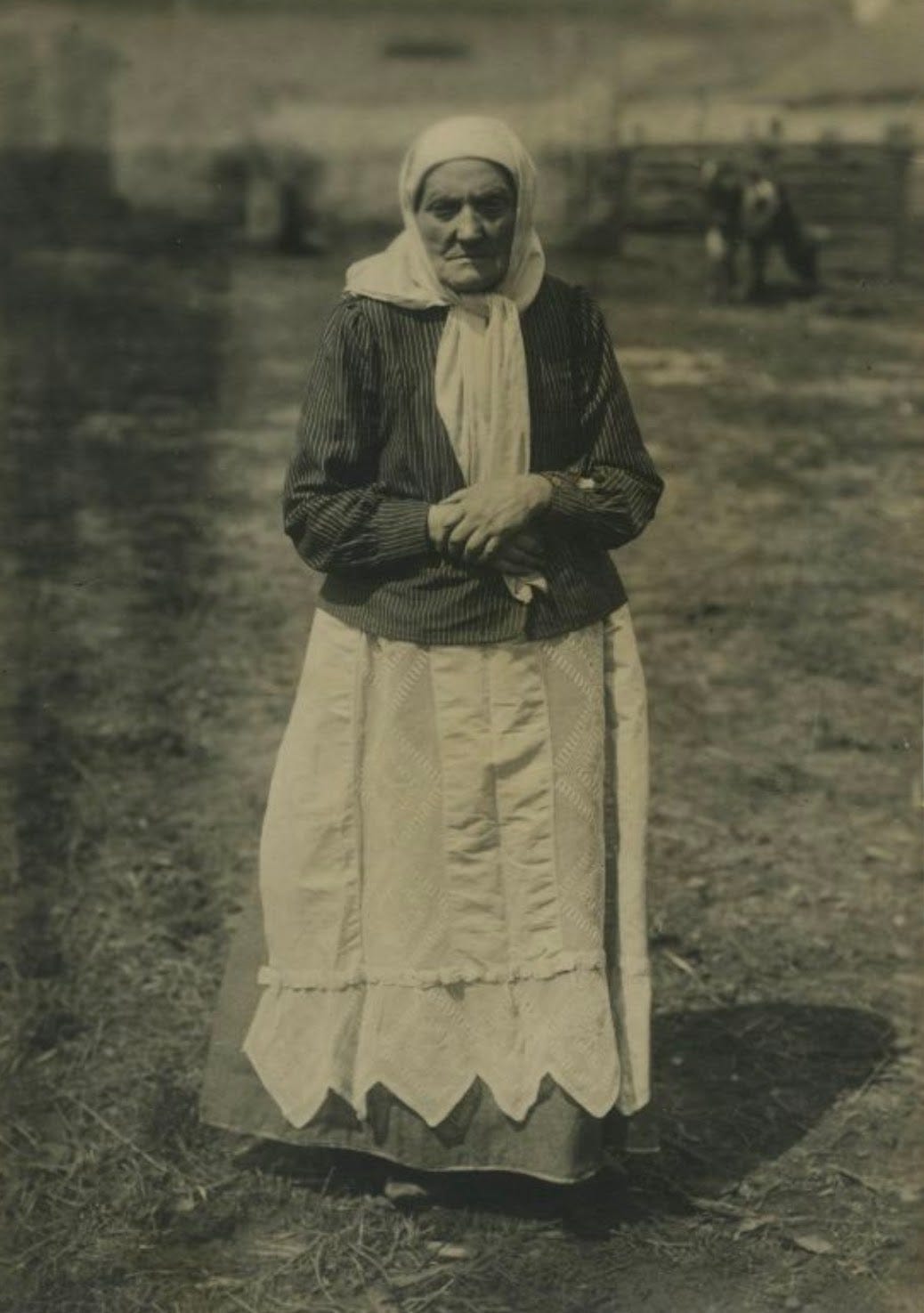
HUNTER MOON


This morning my love called me

out onto our sunlit balcony

to see a fawn, the quick spindles

of its new legs as it wove

a narrow path through the Bradford

pears, its fine head lowered

to graze the shimmering grass

and then lifted to follow the sound

of our voices. And though

I felt the sun on my face and my

own hand warm on a mug

of sweetened coffee, I ruined

the moment, thinking of hunters

with their rifles raised—I don’t

understand how they can do that, I said.


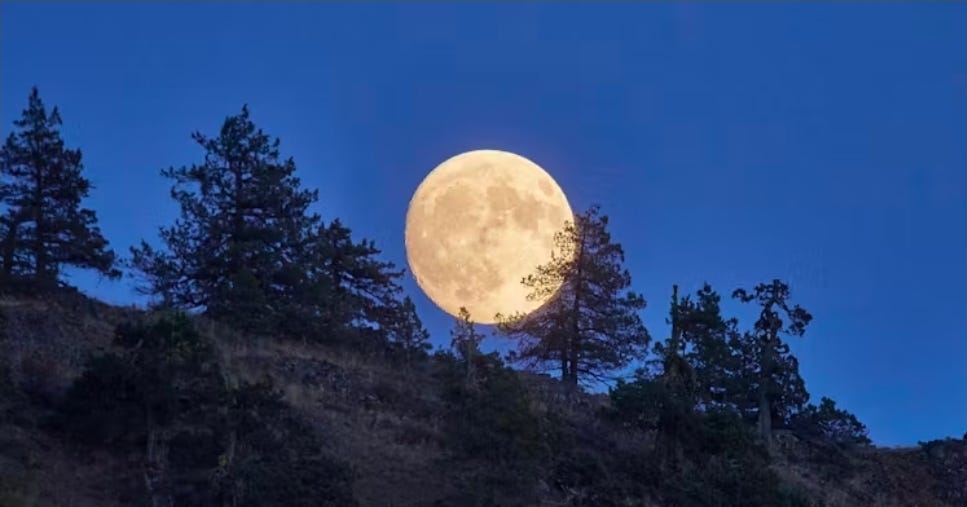
Some nights my love has called

me out to watch clear skies speckled

with far-flung stars, to see full moons

so bright they lit up our darkened

living-room, cast white or gold

squares of light on our floor—

Strawberry Moon, Hunter Moon, Buck—

and I’ve thought about how we were

seeing the past, and how I’ll never

understand about the time it takes

the light to reach us. Once we watched

a lunar eclipse, the legerdemain

of the moon’s slow erasure, its slow


return. In the sleepless hushed hour

of the wolf, together we’ve stood

tracking the red lights flashing,

like giant fireflies above the live oaks,

of the air ambulance heading

for Children’s Hospital, and because

we are, the two of us, who we are,

I felt sad, thinking of the damaged

and sick children it carried, and my love

felt glad, thinking of their rescue.
UPON READING THAT, ACCORDING TO THE JEWISH CALENDAR, DAYS BEGIN WITH NIGHT

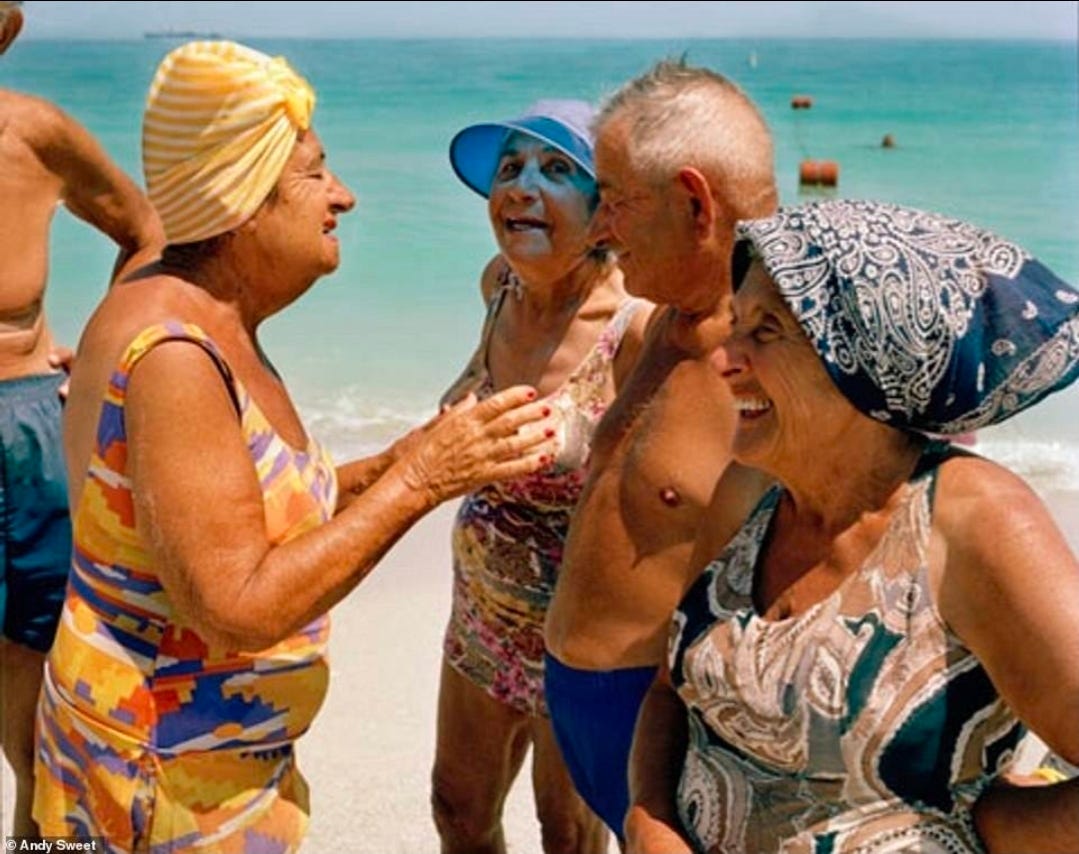
I think of my mother’s Coconut Creek buddies,
all in their late eighties, clustered

around the condo pool in their floppy hats
and flowery one-piece suits

like so many withered blossoms. Getting old ain’t for sissies,
they liked to warn. Meaning the obituaries

they scanned each morning on their sun-wrecked
lanais over bagels and decaf—Who do we know?

Who’s younger? Older? Meaning the blue-and-white
ambulances, ubiquitous as the surrey-fringed

golf carts prowling their planned community,
screaming harbingers among the rapacious

tropical blooms and subdued fake lawns. Meaning
walkers, nurses, and companions from the islands.

Meaning hip fractures, glaucoma. Tumors. Each new
day not a beginning, but one day less. At sixty-nine,

you and I are babies, they scoff, but hasn’t it begun?
This one surprises his wife with new hearing aids

in lieu of birthday roses. That one’s darling needs
new medications for his fragile heart. Gray hair,

less hair, lost reading glasses. Vanity’s the least of it.
Making love’s acrobatic, but not in some up-

against-the-elevator-wall Cinemax way. And of course,
it’s an illusion, and no work for the sun, what we call

its rising and setting, as we turn and turn, passing
in and out of its light. Night doesn’t fall,

day does not break. It’s this fragile earth, endlessly
circling and spinning, that we should pity.
✡️
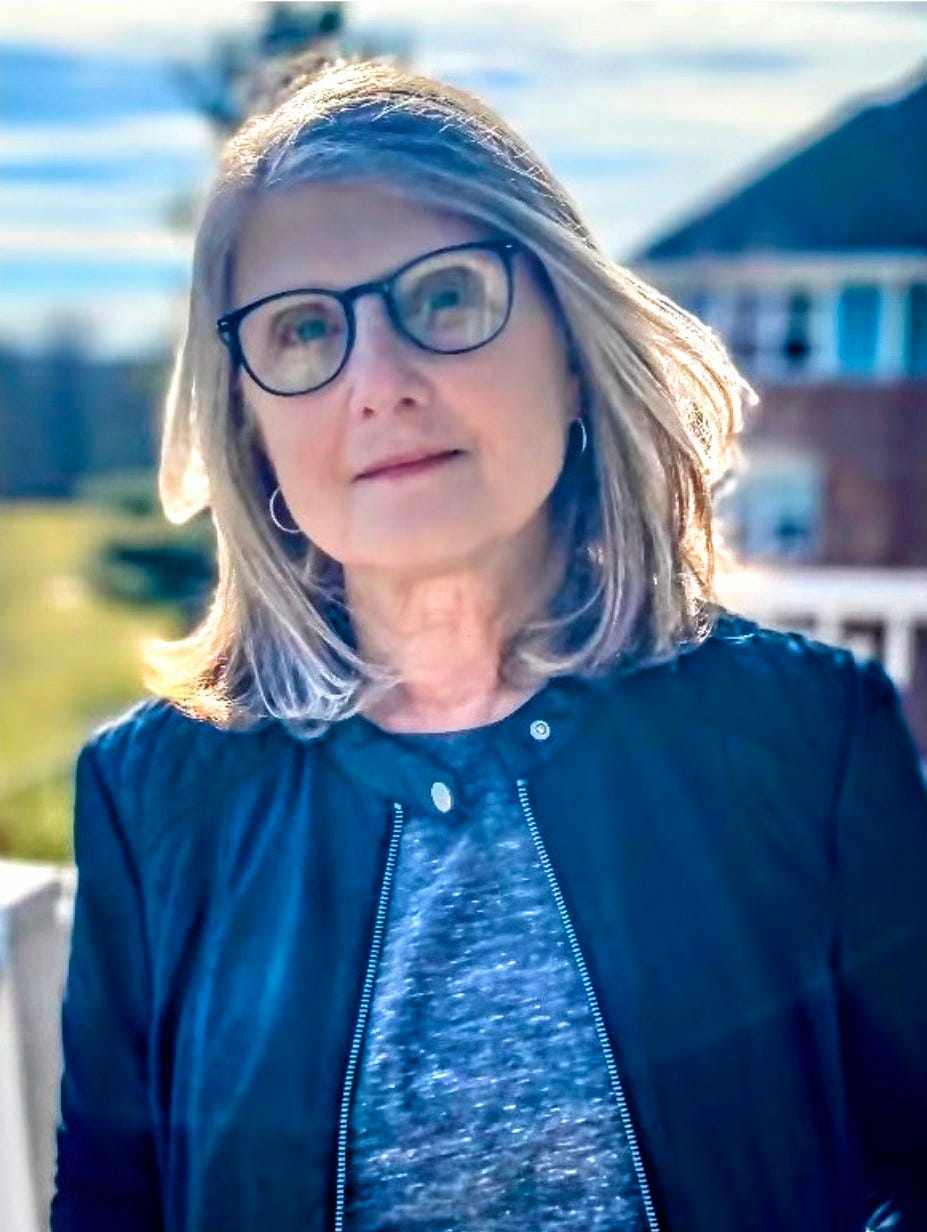
Susan Aizenberg is the author of three full-length poetry collections: A Walk with Frank O’Hara (University of New Mexico Press Mary Burritt Christiansen Poetry Series 2024), Quiet City (BkMk Press 2015), and Muse (Crab Orchard Poetry Series 2002). Her awards include a Crab Orchard Poetry Series Award, the VCU Levis Reading Prize, a Distinguished Artist Fellowship and two Individual Artist Fellowships from the Nebraska Arts Council, the Nebraska Book Award in Poetry, a Glenna Luschei Prairie Schooner Award and the Mari Sandoz Award from the Nebraska Library Association. Aizenberg also is the author of First Light, a fine arts letterpress collection of 11 poems with original linocuts by artist Kevin Bowman (Gibraltar Editions 2020) and Peru, a chapbook-length collection included in the volume Take Three: 2/AGNI New Poets Series (Graywolf Press 1997), and co-editor, with Erin Belieu, of The Extraordinary Tide: New Poetry by American Women (Columbia University Press 2001). Her poems and essays have appeared or are forthcoming in many journals, among them The Slowdown, On the Seawall, Plume, The Summerset Review, Nine Mile, Cultural Daily, Hole in the Head Review, Blackbird, The Night Heron Barks, Bosque, The North American Review, Prairie Schooner, Ted Kooser’s American Life in Poetry, and The Journal, and have been reprinted or are forthcoming in several anthologies, most recently in Poetry Goes to the Movies (Pacific Coast Poetry Series, 2025). Aizenberg was for many years Poetry Editor of The Nebraska Review, served as Poetry Editor for Numero Cinq, and is Professor Emerita of Creative Writing and English at Creighton University. She now lives, writes, and from time to time teaches online and in-person workshops for Larksong Writers Place, the Iowa Summer Writing Festival, and elsewhere in Iowa City. She can be reached at her website susanaizenberg.com.
✡️
What are five tiny delights that lift your spirits and make you happy?
1. Texts from my kids of photos and videos of my grandchildren;
2. Waking up early enough to catch the sunrise over the trees;
3. Wine on the balcony with my husband in spring and summer;
4. The incredible poetry section at Prairie Lights bookstore here in Iowa City;
5. Coffee with friends in coffee shops where at the next tables you can hear folks speaking Mandarin or discussing particle physics.
What are five tiny Jewish delights that lift your spirits and make you happy?
1. Shabbat Sing at my grandchildren’s day school;
2. Latkes with applesauce;
3. Avinu Malkeinu;
4. Relaxed, laughter-filled Passover seders with our extended family;
5. Reading the poetry of Jewish poets.
✡️