

Ritual Emersion
Introducing the poetry of Immanuel Suttner

Editor’s Note: Wry humor runs like a superhighway through Immanuel Suttner’s poetry. His epigrams — short poems, featuring an ironic twist at the end — look to upend some of Judaism’s most cherished religious notions. In one poem, God longs to be freed from the contract he’s been forced into by nudnik humans; in another, our bodies are made to bow before genetics as much as before any cosmic deity.
Suttner’s writing has emerged from his love for etymology and his experience of having attended a yeshiva in Israel. Born in South Africa, he currently lives and works in Australia.
— Susan Comninos

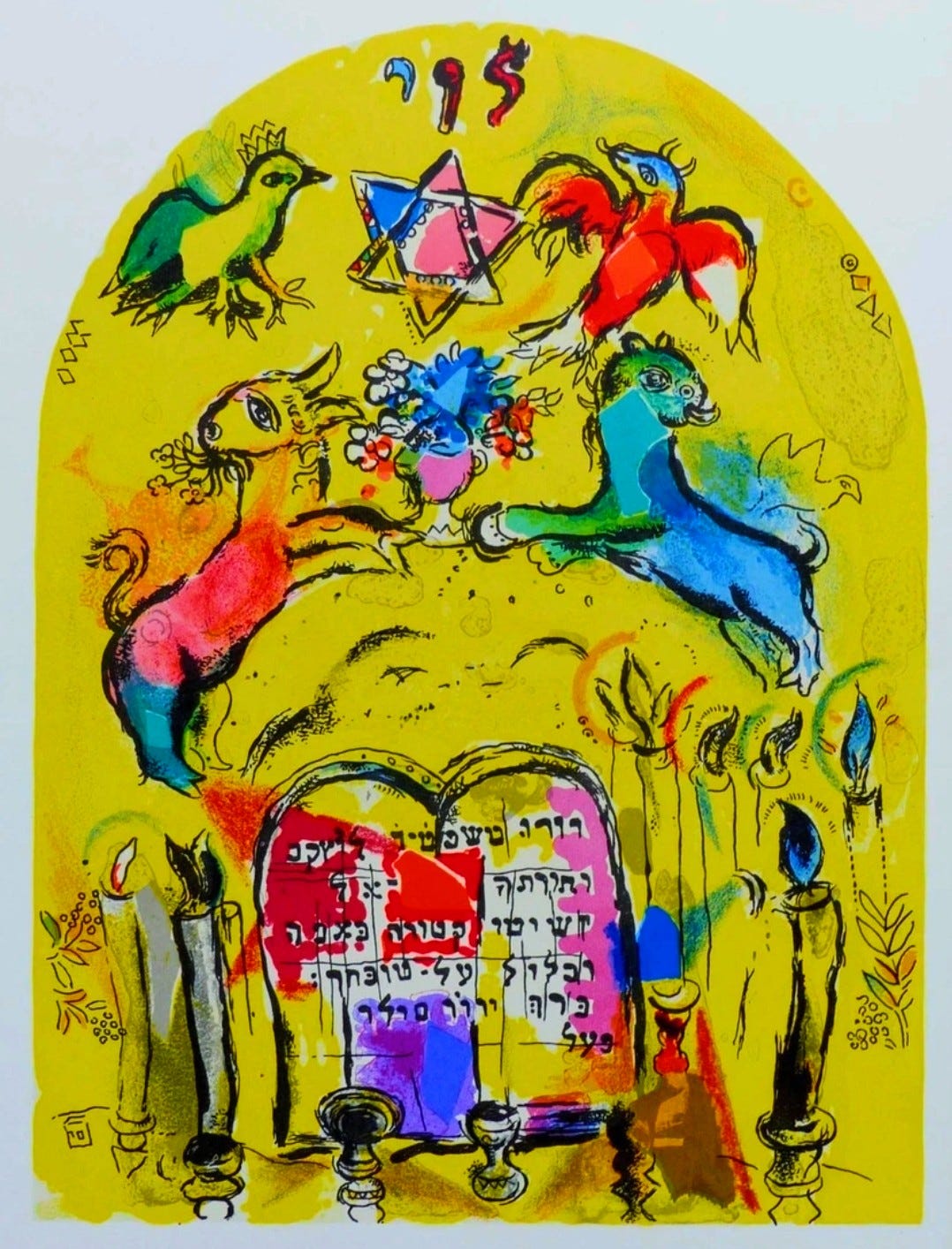
SHNEI LUCHOT HABRIT [THE TWIN TABLETS OF THE LAW]

the twin tablets of the law:
chromosome pairs that dictate
how the body will
bud, blossom and wilt

*Shnei Luchot haBrit: The twin tablets of the law that Moshe supposedly brought
down from Mt. Sinai.
HANOTAYN LEYAEF KOACH [ANOTHER POSSIBILITY]

suggestion:
instead of giving
strength to the weary
could You please
just allow them to rest?

*Hanotayn leyaef koach: From the morning blessing, “Blessed are you O Lord, our G-d, who gives strength to the weary.”
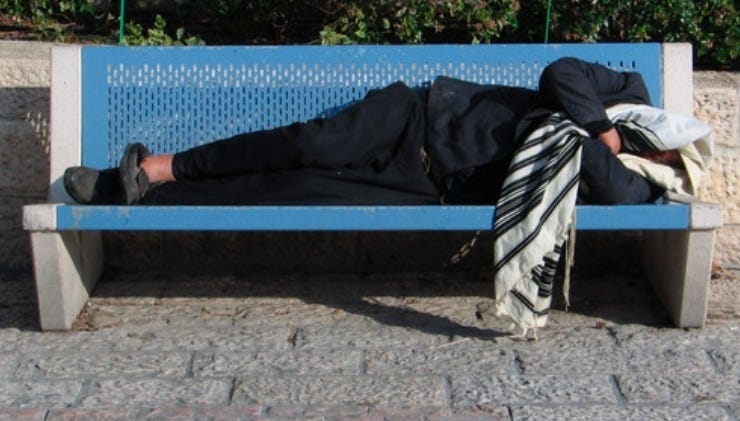
KORBAN OLAH [SACRIFICE]

the rabbi
(bachelor, available)
at the only shul

vaguely near me —
who prepares the food himself
for monthly communal dinners —

left the broccolini and
brussel sprouts
in the oven too long:

a burnt offering
pleasing to the Lord

TEFILAT HADERECH [PRAYER OF THE ROAD]

oh Lord, keep me black
and fill my holes
with tar
make me run to interesting places
and don’t let them build
a highway to replace me

*Tefilat haDerech: A Hebrew prayer for travelers, to be said when embarking upon a journey. Meaning “prayer for the way,” it also translates as “prayer of the road.”
TECHIYAT HAMAYTIM [REVIVAL OF THE DEAD]

after the interminable

shabbat morning service —

finally, the brocha.

TIKKUN CHATZOT [A LITTLE REDEMPTION]

Once in Jerusalem
very late
I took the No. 9 bus home
and on the way,
at a flashing light,
saw a road gang
fixing a pothole —
that meant at least as much
as the rebuilding
of the Beyt haMikdash.


*Tikkun (fixing) chatzot (midnight): A custom where devout Jews rise at midnight to recite prayers, mourn the loss of the temple in Jerusalem, and pray for its restoration.
Beyt haMikdash: The holy temple that once stood in Jerusalem.

TIKKUN OLAM [HEAL THE WORLD]

sometimes I get a crazy desire
to fix things

not the world
for which I don't have a license

but something like a mobile phone
into which a zealous child has stuffed
the sim card the wrong way

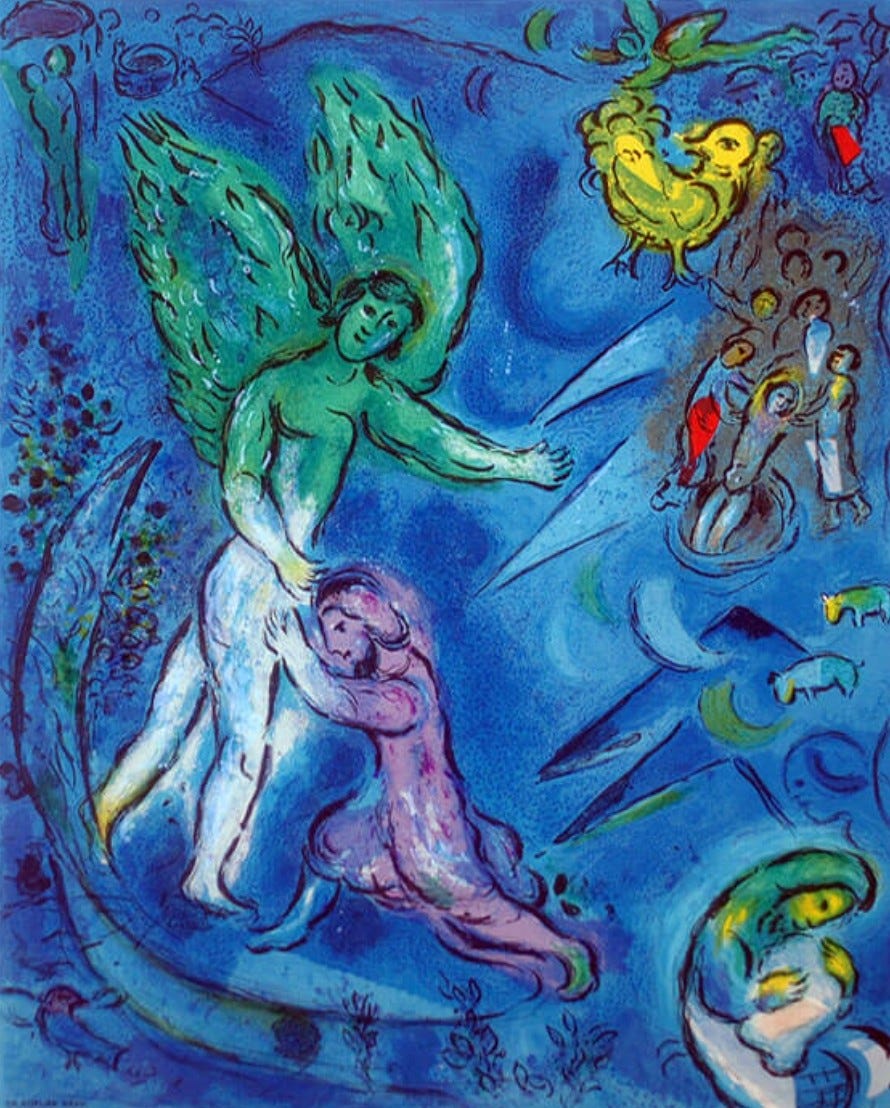
then I wrestle with the phone
like Yaakov and the malach
for hours and hours
till both it and I
are broken
A MAN OF VALOR


A good husband who can find him
for his price is above shares in banks or mining houses
he takes out the garbage, he loads the dishwasher
he cuts his toe nails, he puts down the seat
trims his nasal hairs, fixes more than he breaks
he unblocks the sink, does homework with the children,
takes them to sport, and cooks up a storm

he leads the dog to green pastures and rinses her bowl
folds up the linen and puts it away
he handles his needs without bothering his wife
who contentedly snores at his side

his shoe cupboard declares
his fancy footwork all his days
and in the evening,
obituaries
quietly sing his praise
MATIR ASOORIM [LAST IMPEDIMENT]

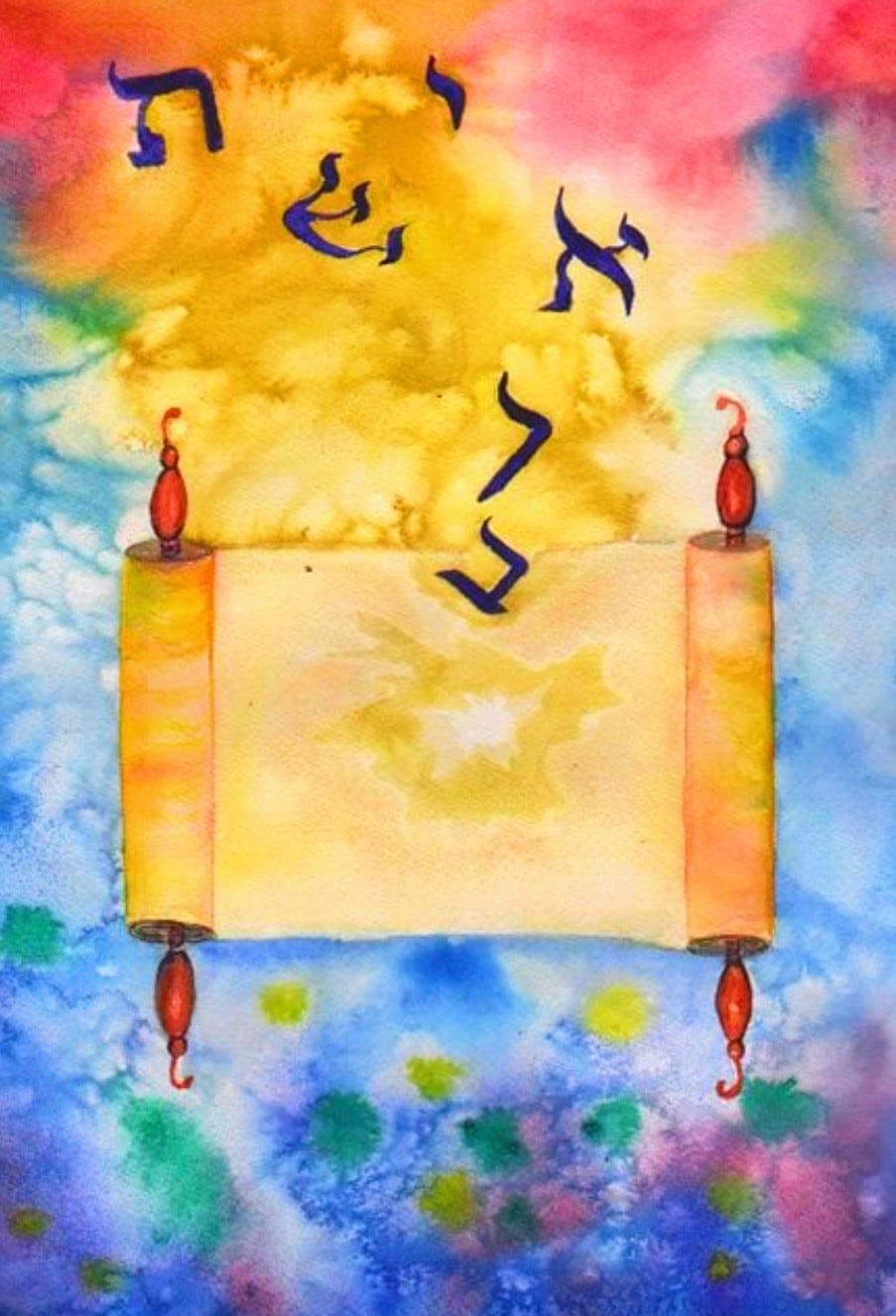
we have bound Him
with words —

now G-d patiently waits
to be freed from the scriptures.
✡️
Bio
Immanuel Suttner grew up in South Africa. Shortly before his 18th birthday, he moved to Israel. There for a decade, he spent time in a yeshiva, in the IDF, and at the Hebrew Univ. of Jerusalem, earning a degree in English and Hebrew literature. The experience exposed him to a broad array of English and Hebrew source texts, which he frequently alludes to, plays with, or subverts in his poetry.
Im 2008, he relocated to Australia and is grateful to call this ancient land — with its songlines and bustling cities, its immigrants from many lands, its unique flora and fauna — home. There, he works as a counselor and writes poetry.
Suttner's work has been described as contemporary zen with charoset, served on a bed of “rye” humour; as devotional poems disguised as complaints to G-d, mixed with confessional outpourings, ironic salvos at the idiocies of consumerism, and love poems to his late dog Ella.
✡️
Five tiny delights:
1. Looking at the trees outside my window while sipping my one and only coffee of the day.
2. Receiving a sensual aromatherapy or reflexology massage in a heated room and blissing out.
3. Seeing a pod of dolphins or a whale breaching off Australia’s coast.
4. Watching wildlife documentaries that fill me with a sense of wonder.
5. Taking a dip in the ocean. I live 400 metres from Botany Bay.
Five tiny JEWISH delights:
1. Listening to or watching Hebrew programming and realizing how supple, fluid and descriptive the language has become since Ben Yehuda.
2. Eating challah with butter (sorry, cows, and baby calves) and gefilte fish with chrayn (horseradish) or homemade mayo (sorry, fish)!
3. Saying a bracha as a gratitude-amplifying device.
4. Drinking kiddush wine mixed with sweet grape juice.
5. Singing with my B’nai Brith a capella choir, and enjoying the music and warm camaraderie.
✡️
Last month, Immanuel Suttner released a new book of poems, “Becoming the Sea,” available for sale here: https://shop.sydneyjewishmuseum.com.au/products/becoming-the-sea-immanuel-suttner. To purchase his other books, or read reviews of them, please visit the following link: https://manofestoyomi.blogspot.com/2025/07/launch-of-becoming-sea.html
I loved the poems and illustrations!
These are wonderful! The ancient and familiar merges with the new and modern...delightful..and profound.