

The Tenth Generation
“I call heaven and earth to witness against you this day: I have set before you life and death, blessing and curse; therefore choose life — so that you and your children may live.” --Deuteronomy

Editor’s Note: A short story by Philip Graubart about a woman rabbi in a small college town navigating the excruciating tensions that arise in her family, community, and her own struggling conscience in the wake of October 7 and the bloody Gaza war. —David Michael Slater
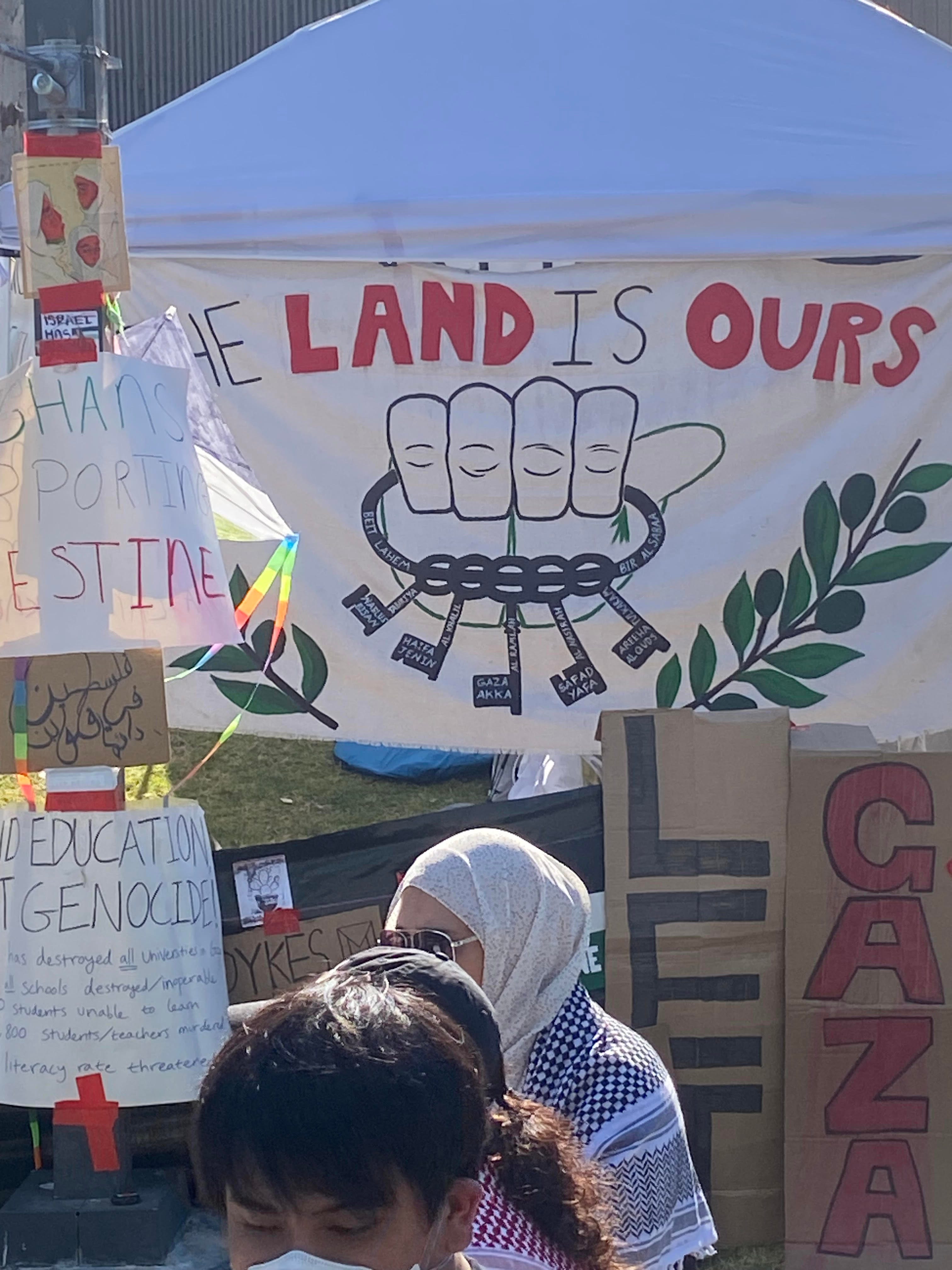
Photo credit: Philip Graubart
“Ten generations!” Elijah exclaimed, lifting his can of diet cream soda to click my glass of water. “That is an accomplishment!” We were at Korny’s, the new kosher deli in Spring Hill, indulging in calorie-free, non-alcoholic, kosher toast. Korny’s was the latest in a string of failed Jewish restaurants that targeted the fifty or so families in our college town that kept kosher. The lunch crowd was the same as the breakfast and dinner crowds: a rotating group of committed diners eating mediocre corn beef on vaguely dissatisfying rye bread. I was the only rabbi in town. I knew every customer.
I studied Elijah’s grin, the furry, snow white, Ultra-Orthodox, Santa Claus beard surrounding his wide-open mouth, the deep Martian-like canals lining his forehead, the gray, watery, rheumy eyes which somehow broadcast both joy and sadness at the same time. He claimed to be 92, but he could have been 82 or even 72. Not that I had any reason to doubt him. But I did feel the need to correct one fact. “Actually,” I said, “it’s nine generations. I’m the ninth-generation Rabbi Leibovits.” I took a sip of water, then added, “First woman,” as if that required clarification, as if maybe he hadn’t noticed.
Elijah had phoned me two days prior on my private cell phone. He was in town for a few weeks “on business.” I assumed that meant he was guest lecturing at the university or doing a rotation at the medical school. Professors and doctors made up a majority of congregants in the town’s only synagogue. But he was here for other reasons. “I’ve got news,” he said enthusiastically, charming me instantly with an authentic Yiddish accent—obvious in just three words. “News about your great-grandfather. Your holy zayde’s tatte.”
“News?” I said. A smile somehow forced itself onto my face. My great-grandfather had been dead for over seventy years.
“Of blessed memory, of course. Righteous memory. I am referring to new documents. Manuscripts. Correspondence. Photographs of him, of Bubbe, Zayde, cousins, half-sisters, the shul, the mikveh in Stashov. Diaries. And sermons, a sea of sermons! A holy, precious archive, saved from the ashes. Please, Rabbi Leibovitz. Korny’s. I see Korny’s in my Google. It is kosher? Really kosher?”
A complicated question, more controversial than one might think. But the owners were friends, and I wanted to send them any customers I could. “Really kosher,” I said.
“I believe you, of course! Lunch, then. Today? Tomorrow? Next day? Please, Rabbi.”
We settled on the day after the next day. It was my day off, but really, it was my only opening for over a week. Anyway, it sounded personal.
“I should make a reservation?” he asked.
I thought of Korny’s thirty-five tables. “I don’t think that’s necessary.”
“Yes, yes, of course,” he said, grasping his thick sandwich in his thin fingers. His name was Elijah Goldstern. “You are the ninth generation of this illustrious line. But I’m referring to your daughter, your Hannah. She will be number ten, God willing.”
I stared at my overstuffed sandwich, thinking maybe I could eat half of it. A quarter? Not for the first time, I calculated the odds of my sixteen-year-old Hannah following in the family’s footsteps. She had many diverse interests—robotics, basketball, bluegrass fiddle, Tolkien, socialist podcasts, and stand-up comedy. But, despite having two Jewish professional parents who spent hundreds of thousands of dollars spent on a lifetime of Jewish education, she had approximately zero interest in Judaism, Jewish practice, Jewish culture, Jewish religion, Jewish food, or Jewish people. Maybe less than zero. “How do you know about my daughter?” I asked.
Elijah whisked his phone out of his black coat pocket. His thick thumb and slender forefinger danced quickly on the surface, after which, he reached across the table and handed me the phone. I checked out the screen, then handed it back. “My Wikipedia page,” I said. “I didn’t know I had one.”
“I set it up. Just now. Well, two weeks ago. In honor of your great, righteous great-grandfather. People should know. You. Your family. Your yichus. Nine generations.” He smiled slyly. “Maybe ten. Here, I must show you,” he added, finger and thumb nimbly performing another phone operation. He turned the screen toward me. Hannah and Elijah, smiling at the camera like long-separated, suddenly reunited lovers. Hannah, pressing herself so tightly into his fleshy stomach that she could have been sitting on his lap. “Such a sweetie,” he said, rotating the phone so he could see it, tilting his head, contemplating my daughter as if seeing her future as the tenth Rabbi Leibovits.
“How…?” I asked.
He waved my question away, as if the hows and whys of our relationship had become totally irrelevant. “I was by the school yesterday. Some ceremony. They asked me to speak to the holy students. Hannah didn’t tell you?”
Hannah, I thought, shared nothing of what went on in school, or, for that matter, what was happening in the rest of her life. She was a teenage girl, an only child of a single mom. She spoke, when she spoke to me at all, in grunts, whines, or urgent desires, mostly for money. But I didn’t need to share confidences with the frum Santa Claus sitting across from me. I shrugged.
“Such a sweetie,” he said again, pointing critically at my barely-eaten sandwich. Ninth-generation rabbi, but I really didn’t like corned beef. Elijah, having already polished off his gargantuan sandwich, finished his potato knish in three large bites, then reached under the table, groaned, and plopped a stuffed shiny black leather briefcase on the table.
“Some hard copies of documents,” he explained. “A few sermons, some photos. I print a selection. Some files, photos, and family trees. But for the whole gantze archive….” He dug into the briefcase, shoving his entire, black-sleeved arm into it, feeling around on the bottom. I thought of tefillin, black leather straps swallowing his ancient arm. It emerged with a thumb drive in his skinny fingers, which he handed to me. “I give you these hard copy papers, Rabbi Judith. Manuscripts. Printed pictures of long-dead family. Yiddish letters. But the rest? I am referring to sound files, drawings, radio sermons, klezmer niggunim, family discussions, and some film clips. Precious, precious treasures.” He pointed to the thumb drive, shining like a ring meant for my finger. “It is all there.”
I closed my hand around the small metal contraption. “I don’t know what to say,” I said. “Thank you.”
He waved in the air, as if swatting a mosquito. “For nothing you thank me. Your heilige great grandfather. I knew him so well.”
I did some mental math. My great-grandfather, Rabbi Judah Leibovitz, six in the Stashover Rabbi Leibovitz line, died in 1954, twenty years before I was born. He was seventy-two when he died, which would make this mysterious Elijah… “Nine-two,” he said, grinning like a schoolboy who had just performed his first magic trick. “I’ve told you my miracle age. Nu, maybe until 120? Anyway, I was a small boy when I met the great and holy genius Rabbi Leibovits. A story? I can tell you a story?”
I gave up on my sandwich and leaned back. I motioned for him to continue.
“We were in the forest, running from the Nazi roundup. You know the dark forest. Tall pines. Squirrels, robins, a few inches between trees. No sun, all shade. Just outside of Stashov.”
I nodded, though I’d never been to Stashov, much less the forest surrounding it. But a forest is a forest, and I wasn’t about to interrupt. He stared straight ahead while he spoke, oddly, not at me, as if his audience was the empty booth in front of us.
“We were sprinting, panting, no destination, just running away. I’d already lost contact with my brave and beloved parents, may their memory be a blessing. It is pure coincidence or, no, it was an act of the almighty. I found myself running next to your holy and sweet great-grandfather, the Stashover Rebbe. He grabbed my tiny hand with his big one, and we ran so fast. Olympic medalists, truly. He held tight to my palm, and we dodged and danced and he pulled and pushed and yanked. We are getting away! But we came to a ravine, thick and long. You’ve heard stories. Shooting Jews into the ravine. We heard those stories also. They are my nightmares. I told the rebbe, we are finished. The Nazis will catch up; they will shoot us right here. Rebbi, it’s time for the Shma and our final prayers, I yell at him.
“But he shushed me. He told me, Elijah, my son. We’re going to jump. Eagle’s wings. God will send them. We’ll fly. I heard soldiers screaming in German. Dogs, demon dogs barking from hell. Shots. Screaming Jews, dying, maybe my parents, my sister, my best friend, Itsik. I closed my eyes and began my final words. But the heilige rav, he grabbed my arm. ‘We are jumping,’ he shouts. He’s counting down—in Hebrew! Echad, shtayim, shalosh… and we jumped. We jumped! We flew. Rabbi Judith, we flew. On the wings of eagles. The wind—God’s wind—it carried us. We landed with a thud on the other side. Safe.” He turned to me and smiled—a Santa Claus grin. I waited for more. Where did they go after the ravine? How did he survive the rest of the war? But he just smiled widely, as if the flying itself was the end of the story; it didn’t matter what happened after they landed. I ran through some of the details in my brain, and then tried a few more calculations about dates, time passed, and location. Something didn’t quite add up, but my phone buzzed, reminding me of my next appointment. Without a word, Elijah slapped three twenty-dollar bills on the table, then once again beamed his toothy grin at me. We stood. I noticed that sometime in our conversation, he’d managed to finish off his pickles, coleslaw, and cream soda. He’d inhaled all his food. My single sandwich sat nearly complete, with just a few nibble marks, as if a fastidious mouse had gotten hold of it. I had an inexplicable urge to hug him, but I resisted. Instead, I held out my arm for a handshake. He took a tiny step back. “Ah, Rabbi Judith, you know I don’t…”
“Shomer Negiah?” I asked, referring to the ultra-Orthodox injunction against touching the opposite sex. “But Hannah… in the picture?”
“Oh, well, nu, who can resist Hannah? She wanted a hug. I should say no?”
I nodded, trying to remember the last time Hannah wanted a hug from me.
At the door, he shone his Santa Claus face at me again, his cheeks blushing a deep red. “Your great-grandfather,” he said. “He would be so proud of you.”
I nodded slowly. I’d often wondered what my illustrious Leibovitz rabbi predecessors would have thought of me. I’d officiated at gay marriages. Permitted electric guitars, synthesizers, and a complex sound board during Friday night services. I had sex out of marriage. I was a woman! From what I’d read, my great-grandfather was the scourge of non-Orthodox rabbis in Toronto, where he’d immigrated after the war.
“Would he?” I asked.
As if reading my mind, he nodded vigorously, anxious to reassure me. “You’re strong. And you love your people. That’s all that matters. Nu?”
That night was Hanna’s turn to make dinner. She plopped a strange bowtie pasta dish in front of me. Some tiny, round brown grains dotted the pasta. “Kasha Varnishkes,” she said.
“Excuse me?”
She shrugged, took her seat, and dug into her dish. “I felt like Ashkenazic food tonight. Not sure why.”
We ate without talking. That was normal for the past nine months. She used to jabber nonstop during dinner, or breakfast, or lunch, talking with her mouth full, despite hundreds of scolding reminders to stop. She’d chatter to my husband and me when we were married, then, after the separation and divorce to each of us individually, or to any guests or strangers sharing a meal with us, always at home, sometimes in restaurants. But since her sixteenth birthday, sullen silence reigned, or maybe just silence; I had no idea if it was sullen. She wouldn’t talk about it. I wasn’t worried—she was bound to exit adolescence one day, and anyway, I didn’t mind a little silence after a long, talky day. About a month ago, I relented on our policy of no phones at the table. If we weren’t going to chat, why not use the time to catch up on email or texts? That night, Hannah and I munched on our Kasha Varnishkes—which, I had to admit, weren’t bad—with our phones propped up in front of us. But her Ashkenazic food reminded me of Elijah. I pushed aside my phone and asked if an old Jewish guy came talk to her class today. “Holocaust survivor,” I added, “in his nineties?”
“Santa Clauss beard?” she asked, pantomiming long, fluffy facial hair.
I nodded.
“Such a cute man,” she said, smiling as widely as she had when she was eight and we brought home Mottel, our dog. “He gave such an interesting speech.”
“He let you hug him?
“Of course. I asked him to. How could I resist? It was like hugging Santa Claus, something I never got to do.”
Hannah leaned in closer to her phone, signaling that the conversation was over and that conversation in general during dinner was frowned upon. Exactly one hour later, Peter, my ex-husband, knocked. When it came to swapping Hannah, he was always on time. Hannah grabbed her bag, nodded at me, then raced to open the door. She ran past Peter to his car. Peter shrugged and smiled. I wondered if he would hug me if I asked. But he’d already shut the door. I could hear him walking away.
Two days later, I was getting dressed for Saturday Shabbat services when Hannah screamed at me to turn on the news. It’s Shabbat, I thought. But we’d long abandoned screen radio silence on Saturdays, and when had Hannah ever asked me to turn on the news? I clicked on the small TV in my bedroom and, almost instantly, my hand flew to my mouth. A young woman with a bloody white dress and a face full of nothing but pure panic was being kidnapped on a motorcycle. Piles of dead bodies lay prone across a lawn filled with tricycles, dolls, and basketballs. Half-naked, weeping young children ran across rocky fields with their hands up. The news anchor spoke shakily of fifty deaths so far, maybe more. The fifty, of course, in the course of the next hour, would grow to one hundred, to five hundred, to over one thousand Israelis and guest workers, slaughtered in cold blood by terrorist psychopaths who celebrated ecstatically every death, every kidnapping, every drawing of blood.
But my hand wasn’t covering my mouth to block vomit or a scream. It took a few seconds, but I recognized the fields where the panicked children were running. I knew the terrified young woman on the terrorist motorcycle. The lawn with the toys and the corpses was familiar to me. This was all happening at Nir Oz, a kibbutz on the Gaza border. I’d been there for three weeks, less than a month before. I traveled to Nir Oz at least once a year, always staying with the Azars, a family of five. So many victims, I thought. Where were the Azars?
We kept an iPad on the pulpit during services. I blatantly shattered the Shabbat atmosphere by refreshing the news every five minutes or so. But no one complained. Everyone in the room had a relative or a close friend in Israel. The attack was ongoing. Sirens rang out from cell phones. Our Israeli friends and family members were all hiding in shelters, throwing on army uniforms, or huddling in their cars. Our synagogue had a sister city relationship with Nir Oz. Over the years, many of my congregants had visited there, awed by the bravery and charmed by the hospitality of its inhabitants. And Nir Oz sent delegations to us several times a year—of social workers, teenagers, and town leaders. I’d personally hosted dozens of Nir Oznicks in my house, including the mayor, the high school principal, and a high-tech millionaire. Three summers before, the Nir Oz visiting teen group adopted Hannah, taking her dancing, to the lake, hiking, to the movies. Now those teenagers, army age, were under attack.
After services, I punched in the number for the Azars over and over, with no answer. I got through to my college roommate in Tel Aviv, an old boyfriend in Nahariya, my aunt and cousins in Modin, and a rabbi friend in Haifa. They were all shaken, but fine. But I couldn’t get through to anyone in Nir Oz. Later that night, Mike Kaplan, the synagogue president, knocked on my door. I gestured for him to come in, and we spent the next hour on our phones, tracking down whatever information we could. I’d just taken a bathroom break when I heard him screaming in pain. I hurried to him. Face red with grief and fury, he handed me his phone. The text was in Hebrew. I read it quickly, then fell to my knees. All five Azurs—Benny, Kitty, Ilan, Nir, and Yam were found dead in the king-size bed the parents shared. They were hugging. Each of them had been shot once in the head. A scene of horror invaded my consciousness like a dybbuk: smoke, shouts, cries from parents, from children, automatic weapons fire, missiles, interceptors. Then the sound of one gunshot. Desperate, mournful screams. Then another shot. Fewer screams. Then another. Then another. Then another. My face fell to the rug, and I exploded in weeping. “No! No!” I screamed. Or maybe I just wailed, beyond words. “Rabbi Judith!” Mike said, lifting me to my feet. “Rabbi Judith!” he repeated, “we have to get it together.”
I shook him off as if he were a terrorist intruder. But I turned and saw his reassuring eyes. “We’re leaders in this Jewish community,” he reminded me. “We have to lead.” Benny, I thought. And Kitty. Oh Kitty. But I caught my breath and nodded. Time to lead.
The next morning, I was making calls from the kitchen, organizing a solidarity rally, when Hannah sat next to me. I was astonished that she handed me a cup of coffee, which was utterly unprecedented. I hadn’t even noticed that she was in the room. I hesitated briefly, fearing she might shake me off, but she let me bring her in close for a hug, and even to run my hand through her just-washed straight blond hair. “What’s going to happen?” she asked.
I took her warm hand and squeezed it. She’d only been to Nir Oz once, and she’d complained the whole time that there was nothing for her to do there (she was right). But this was terrorists murdering people she knew. “War,” I answered.
“Oh, no. Why?”
“Israel will retaliate.”
“No! They shouldn’t.”
“Hannah, sweetheart, this is mass murder. Plus the missiles….”
“Mom. Mom. Mom! There are babies!” she cried, squirming out of my grip, reminding me of how, as a baby, she’d wiggle away from me, desperate to crawl on her own. “Israel already cut off water,” she wailed. “Water! Babies are drinking from the toilet.”
I slowly reached for her face and touched her lightly. Both cheeks were wet. I was pleasantly surprised that she didn’t jerk away. She was wearing a Boston Celtics sweatshirt and black shorts. Last week, she wore short skirts every day and a series of light pink sweaters. She refused to engage in any conversation about sexuality, appearance, or social pressures. But I had to imagine she was even more confused about her body, her drives, her emotions than I was. “Mom,” she whined, “Israel shouldn’t attack. All they’ll do is kill a bunch of civilians, and the world will hate it— hate Jews—even more than it does now. Besides…”
“Hannah,” I said softly. “You remember the Azars…”
“I know! I know. But Mom….” She sighed desperately, either because she was formulating her thoughts or, more likely, wondering if sharing them with me was worth the effort. “It’s just not right,” was all she could manage.
“I know,” I said. “I know. It’s so hard.”
“You don’t know,” she said softly, still allowing me to fondle her hair. She looked directly into my eyes. “From the river to the sea,” she said.
I held her gaze. “Hannah,” I said. “You don’t understand….” Luckily, we were interrupted by the doorbell. I’d started a sentence, but I had no idea how to end it. What exactly didn’t Hannah understand? What didn’t I understand?
I opened the door to find Mike, his wife, Reina, Bill, the chair of our Israel committee, Ellen, our vice-president, and Elijah, all on my doorstep, looking grim but determined. I’d invited them to help plan our rally. As they filed in, I stared at Elijah. His white beard seemed to have grown longer and fluffier since I’d seen him three days before. “Nu?” he said. “I thought I could help. To Mike, he added, “I have some experience with these matters. That is, with antisemites. And fighting back.” He turned to me, charming as ever, and said, “And this way, I could see you again, Rabbi Judith. And Hannele, of course.” He shrugged when he realized she wasn’t there. “Maybe later,” he said.
After we finished planning the rally, Mike, Reina, Bill, and Ellen headed out, but Elijah lingered. “You have the memory stick, still?” he asked.
“Yes,” I told him, “but I haven’t had a chance—”
He held out his hand. “Please. And your laptop.” After I fetched them, he deftly fed the stick into my Mac, clicked through several screens, then pointed. “You holy heilige great grandfather, my late and beloved Stashhover Rebbe. A sermon. A sweet sermon. Such a privilege.”
A man with a long face, black hat, and scraggly gray beard was talking into a large old-fashioned microphone. There was no audience, so it must have been a broadcast. My grandfather told me that his father had a regular radio slot in Toronto that later became a TV show. But I never dreamed I’d actually witness one of the Stashover sermons. I stared at the screen, focusing on his blue eyes, his sly smile. Then I closed my eyes and tried to concentrate on the sound. Something was wrong with the audio; I could barely hear him. But I heard enough to know I wouldn’t understand a word. “It’s Yiddish,” I told Elijah.
His eyes popped with surprise. “You don’t know Yiddish, Rabbi Judith?” His tone was far from judgmental. It was like he’d discovered some cute birthmark, a flaw that only accentuated my beauty. I shrugged.
“I will translate,” he said. But he didn’t. He just watched, entranced, hypnotized.
“Elijah?” I said.
He turned to me, his bright eyes suddenly moist. “Sorry, it’s just such a mechaye. He says, well, he talks about the new State of Israel. What a blessing it is. Everyone, he says, everyone needs to send money to plant trees. But you understand, Rabbi Judith? You understand this man?” He pointed his head at the computer screen. “This holy rabbi preaching a Zionist sermon?”
I understood. In the early days of Israel’s independence, the overwhelming majority of ultra-Orthodox rabbis opposed Zionism. For my great-grandfather’s community, this was heresy. And courage. I nodded.
“So you see, Reb Judith, why I wanted you to watch?”
To watch an old sermon I couldn’t understand? But I think I got it. “I have to be brave,” I said.
He moved his thick forearm close to my hand. I thought maybe he’d touch it, but he came just short. Shomer Negiah. He guarded his touch. “You are brave,” he said.
Two days later, I met with Laura Jones, Spring College’s Hillel director and Jewish chaplain. Our solidarity rally would take place on campus, and it was up to Laura to negotiate with the college administration. We talked microphones, podium, the order of speakers, musical guests, playlists, and refreshments. Neither of us had ever planned a rally, but here we were, our Jewish community’s two paid leaders. After a third cup of coffee, I asked her if she’d met Elijah.
“You mean Santa Claus?”
I laughed. “That’s the one.”
“Honestly, I felt like sitting on his lap and asking for a toy. But of course, no touching. He said he just wants to help out. The students adore him. I guess he knew my grandfather.”
“Wait, what?”
“My grandfather. You remember, I told you once—he was head of the Jewish Federation in Syracuse. Ol’ Elijah was an Orthodox rabbi back then; they lived on the same block. Morgan Street. I guess my grandfather was kind of a mentor to him.”
I could feel my face flush. “Your grandfather? Are you sure it was your grandfather?”
Laura tilted her head at me, puzzled. “Yes, my grandfather. Is something wrong?”
I shook my head. “It’s just he said he knew my great-grandfather. In Poland.”
“Oh yeah,” she said. “He originally met my grandfather in Russia. After the Holocaust. Or was it Ukraine? Not sure.”
I did some quick calculations. Dates, geographies, ages. Elijah’s stories weren’t quite adding up. But Laura was through talking about him. She scooted her chair closer to mine and put her hand on my forearm. We were colleagues, maybe even friends, though we didn’t socialize. We weren’t at the touching stage of our relationship. But her grip tightened. “Judith,” she said. “Have you spoken to Hannah about October 7? About the rally?”
“Hannah?” I said. I thought about our one conversation. From the river to the sea. “I haven’t really had time,” I said. “Why?”
She nodded, as if agreeing with me, though I hadn’t made any claims. “We have some students,” she said, “some Jewish students who aren’t exactly fond of Israel. Jewish Voice for Peace. Students for Justice in Palestine. Those kids. They’re planning a counter demonstration. And Hannah. Well, she hangs out with them.”
“Hannah’s in high school,” I said. “She’s just sixteen.”
“I know,” Laura said, tightening her grip. “But I see her with the anti-Israel students. She’s planning something with them. She’s got a kaffiyeh.”
“A kaffiyeh?”
“Well, let’s say it’s kind of a scarf. But listen. I can deal with those students. I just thought, you know, your daughter. Maybe you should talk to her.”
“I will,” I told, pulling my arm away.
“Great,” said Laura, sounding relieved. “You know, I saw Elijah speaking with her. They seem close. Maybe he’ll straighten her out. Still, you should say something.”
“Elijah?”
“Oh yeah, he talks to all the students. They adore him.”
When I got back to my office, Elijah was waiting for me in my chair, behind my desk. Beit Or was not a large, wealthy congregation. But, like almost all synagogues, we’d recently installed extensive security procedures. There was an external gate, guards in the parking lot, metal detectors, locked doors that required electronic key fobs, and another guard outside my office. It took me, the rabbi, as much as ten minutes to get from the parking lot entrance to my desk. But somehow, Elijah, with no key, a stranger, new in town, without an appointment, floated in. I guess the ultra-Orthodox/Santa Claus look got him buzzed in.
“Did you talk to Hannah?” I asked. I was standing in front of him, as if he were the true rabbi and I was a supplicant. One of his followers.
“Hannele?” he said, grinning, nodding. “Of course. We talk all the time.”
“About Israel? Gaza? The rally? Palestinians?” He hadn’t made the slightest move to suggest he had any intention of getting out of my chair.
“Nu, a little.” He fondled his beard, as if petting a furry cat. “But mostly, we talk about divorce, two parents living apart, feuds with friends, loneliness. Ach, you know teenagers. The whole world is against them. Oh, and also. A distant mother. A mother who only disapproves. A mother she never sees.” He put his elbows on my desk and leaned forward.
I took one step toward the desk and leaned my face toward his cherubic cheeks. “How old are you? Where were you born?”
He smiled brightly, but the Santa Claus bit wasn’t deceiving me anymore. He looked like a liar. “Nu, I’ve told you some stories about myself. Myself with your saintly great-grandfather in Stashov. I think I’ve mentioned the age of 92.”
“You told Laura her grandfather was your mentor. In Syracuse. The places and numbers don’t add up. What other stories are you inventing?”
He held his grin, as if I were a photographer taking his PR photo. “You are changing the subject? Nu? Away from Hannele.”
“I don’t think you should talk to her anymore.”
“I’m not sure you should talk to her anymore, Rabbi Judith. Look where your talking with her has led. Or maybe I should say where your not talking to her has led. Your absence when she needs you most, when she needs you to tell her what’s what. She betrays her people. From the river to the sea, she chants. You are failing her, Rabbi. You are losing her. We are losing her.”
He spoke to me like a gentle mentor or a kind boss, rebuking a young protégé. It turned my stomach. “Don’t talk to my daughter,” I said softly. We were still nose to nose, the big wooden desk barely separating our faces. He widened his grin and got up slowly, creaking and moaning like an old man. “Please don’t come back here,” I added. “Let’s agree to that.” For a moment, for reasons I can’t quite grasp, I held out my hand to shake. I knew he wouldn’t take it, knew he couldn’t. Was I testing him? Tempting him? Mocking him? Anyway, his eyes suddenly shone with contempt. He moved carefully around my outstretched arm and shuffled out of my office. He wasn’t smiling.
I came late to the rally and hurried to the front row to stand next to Laura. The crowd was chanting Am Yisrael Chai, “The people of Israel live,” rhythmically and in unison. Mike led the chanting from a riser, standing next to Spring City’s Jewish mayor. One high-pitched, eerily loud voice stood out like a soloist. I looked around and saw Elijah on the left side of the stage, holding his own wireless microphone. Somehow, he caught my eye and winked.
Just past him, I saw the counterdemonstration. We clearly outnumbered them, but more and more students were arriving with Palestinian-style keffiyehs covering their faces. They held signs calling for the end of the “Zionist entity,” “Death to settler colonialism,” and “Zionism equals Nazism.” They started their own chants. First, inevitably, “From the river to the sea, Palestine will be free!” Then “Death, death, death. Death to the IDF.” Soon, they were as loud as us, and the sounds melded together into a demonic chaos.
Hannah, her head wrapped in a black and white checkered keffiyeh, stood with the counterdemonstrators, chanting with the fervor of a convert. “Death. Death. Death. Death to the IDF!” But her sign called simply for “Peace and Justice.” I tried to turn away, but Laura touched my arm and pointed at my daughter. Hannah was staring at me. She’d stopped chanting. It was hard to tell in the darkness and the distance, but I could swear her cheeks were damp. I could see her lips forming the word, even as she waved her sign: Mom.
“Go get her,” Laura whispered. “Just go.”
I handed Laura my sign—just a blue and white Jewish star. I took a step toward Hannah, and then another. I could see clearer now. She was crying but also smiling. Waiting for me. I took another step, then another.
But then I stopped. Someone had grabbed my arm. I tried to twist away, but his grip was iron. He was squeezing me, holding me, not letting me go. I looked up. It was Elijah. He was smiling, like Santa Claus.
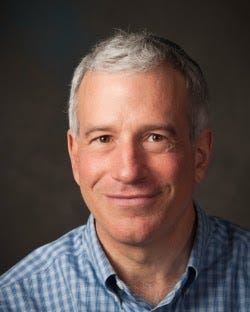
Rabbi Philip Graubart is the author of Here There Is No Why, Planet of the Jews, Silwan, Rabbis and Gangsters, Women and God, Here There Is No Why, and several other novels and essay collections. He has also published numerous essays and short stories in Tikkun, Comment, Forward, Times of Israel, JewishFiction.net, Jewish Literary Journal, and others. Philip served congregations in Massachusetts and California, and held senior positions at the National Yiddish Book Center, the Shalom Hartman Institute, and the San Diego Jewish Academy. For fifteen years, he served as senior rabbi at Congregation Beth El in La Jolla. He currently teaches at the Academy for Jewish Religion in California.
Five Things That Bring Me Joy
A good night’s sleep
Email or letter from an old friend
Coffee in the morning
Bike riding
Long walk
Five Jewish Things That Bring Me Joy
The slow pace of Friday night and Shabbat morning
A really interesting dvar Torah
Moving Jewish melodies
Learning something new
First taste of Matza
This was a tough one.